
In the realm of embedded systems, the need to read MCU AT89C51AC2 software has become increasingly significant for developers, engineers, and analysts involved in microcontroller reverse engineering, firmware recovery, or legacy system maintenance. The AT89C51AC2, a powerful 8-bit microcontroller developed by Atmel (now part of Microchip), features a high-performance architecture with an integrated Flash memory, making it a popular choice in industrial control systems, automotive applications, and consumer electronics.
Read MCU AT89C51AC2 Software from its memory include flash and eeprom, unlock microcontroller protective system and disable the security fuse bit;
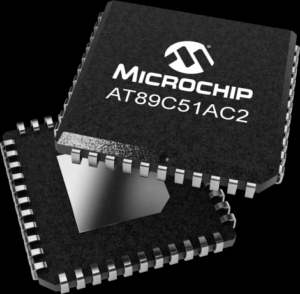
The A/T89C51AC2 is a high performance Flash version of the 80C51 single chip 8-bit microcontrollers. It contains a 32 KB Flash memory block for program and data. The 32 KB Flash memory can be programmed either in parallel mode or in serial mode with the ISP capability or with software. The programming voltage is internally generated from the standard VCC pin.
However, reading or extracting the binary, firmware, or source code from a secured, locked, or encrypted chip like the AT89C51AC2 is not straightforward. The chip includes code protection mechanisms that prevent easy access to its program memory, whether it’s flash, EEPROM, or internal data archives. This presents a real challenge for those aiming to clone, copy, recover, or replicate a device for maintenance, redevelopment, or compatibility purposes.
The A/T89C51AC2 retains all features of the 80C51 with 256 bytes of internal RAM, a 7-source 4-level interrupt controller and three timer/counters. In addition, the A/T89C51AC2 has a 10-bit A/D converter, a 2 KB Boot Flash memory, 2 KB EEPROM for data, a Programmable Counter Array, an XRAM of 1024 bytes, a Hardware Watch-Dog Timer, and a more versatile serial channel that facilitates multiprocessor communication (EUART) when Read MCU at89c51cc03 program.
The fully static design of the A/T89C51AC2 reduces system power consumption by bringing the clock frequency down to any value, even DC, without loss of data. The A/T89C51AC2 has two software-selectable modes of reduced activity and an 8- bit clock prescaler for further reduction in power consumption. In the idle mode the CPU is frozen while the peripherals and the interrupt system are still operating.
The process to crack, break, or hack into a secured AT89C51AC2 typically involves a combination of hardware and software attacks. One common approach is decapsulation, where the microcontroller is physically opened to expose its silicon die. Once exposed, analysts may use laser, optical, or SEM (Scanning Electron Microscope) techniques to probe the internal memory layout and dump the protected binary file. This can then be decoded, decrypted, and converted into a readable heximal format for analysis.
In the Power-down mode the RAM is saved and all other functions are inoperative. The added features of the A/T89C51AC2 make it more powerful for applications that need A/D conversion, pulse width modulation, high speed I/O and counting capabilities such as industrial control, consumer goods, alarms, motor control, among others.
While remaining fully compatible with the 80C52, the T8C51AC2 offers a superset of this standard microcontroller. In X2 mode, a maximum external clock rate of 20 MHz reaches a 300 ns cycle time. The A/T89C51AC2 is a high performance Flash version of the 80C51 single chip 8-bit microcontrollers. It contains a 32 KB Flash memory block for program and data if extract microcontroller at89c51ic2 program.
Another method is glitching or fault injection, where voltage, clock, or electromagnetic disturbances are used to disrupt the microcontroller’s internal logic, creating a temporary vulnerability to extract or restore locked data. These techniques, while powerful, require advanced equipment and expert knowledge due to the secured nature of the chip.
Despite these difficulties, the ability to recover or duplicate the program from a protected microprocessor like the AT89C51AC2 can be invaluable. Whether it’s for replacing outdated units, performing reverse engineering of a competitor’s product, or ensuring compatibility in system upgrades, mastering this process unlocks essential technological advantages.
In conclusion, while the technology to read MCU AT89C51AC2 software is highly complex and often involves bypassing robust security protections, it remains a vital skillset in modern electronics analysis and firmware recovery.
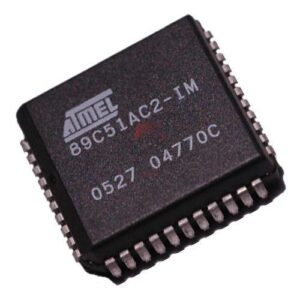
The 32 KB Flash memory can be programmed either in parallel mode or in serial mode with the ISP capability or with software. The programming voltage is internally generated from the standard VCC pin. The A/T89C51AC2 retains all features of the 80C51 with 256 bytes of internal RAM, a 7-source 4-level interrupt controller and three timer/counters. In addition, the A/T89C51AC2 has a 10-bit A/D converter, a 2 KB Boot Flash memory, 2 KB EEPROM for data, a Programmable Counter Array, an XRAM of 1024 bytes, a Hardware Watch Dog Timer, and a more versatile serial channel that facilitates multiprocessor communication (EUART). The fully static design of the A/T89C51AC2 reduces system power consumption by bringing the clock frequency down to any value, even DC, without loss of data.
The A/T89C51AC2 has two software-selectable modes of reduced activity and an 8 bit clock prescaler for further reduction in power consumption. In the idle mode the CPU is frozen while the peripherals and the interrupt system are still operating. In the Power-down mode the RAM is saved and all other functions are inoperative. The added features of the A/T89C51AC2 make it more powerful for applications that need A/D conversion, pulse width modulation, high speed I/O and counting capabilities such as industrial control, consumer goods, alarms, motor control, among others.
While remaining fully compatible with the 80C52, the T8C51AC2 offers a superset of this standard microcontroller. In X2 mode, a maximum external clock rate of 20 MHz reaches a 300 ns cycle time. Figure 1 shows the structure of Ports 1 and 3, which have internal pull-ups. An external source can pull the pin low. Each Port pin can be configured either for general-purpose I/O or for its alternate input output function.
To use a pin for general-purpose output, set or clear the corresponding bit in the Px register (x = 1,3 or 4). To use a pin for general-purpose input, set the bit in the Px register. This turns off the output FET drive. To configure a pin for its alternate function, set the bit in the Px register. When the latch is set, the “alternate output function” signal controls the output level (see Figure 1). The operation of Ports 1, 3 and 4 is discussed further in the “quasi-Bidirectional Port Operation” section.
Ports 0 and 2 are used for general-purpose I/O or as the external address/data bus. Port 0, shown in Figure 3, differs from the other Ports in not having internal pull-ups. Figure 3 shows the structure of Port 2. An external source can pull a Port 2 pin low. To use a pin for general-purpose output, set or clear the corresponding bit in the Px register (x = 0 or 2). To use a pin for general-purpose input, set the bit in the Px register to turn off the output driver FET.