MCU readout protection is an on-chip configuration that blocks external tools from reading a microcontroller’s internal flash memory. Whether it can be undone depends on which protection type and level the manufacturer enabled — not on the chip’s age, price or brand.
레거시 제품이나 보안 설정이 적용된 제품을 유지보수하는 경우, 이 설정은 일반적으로 이후 진행 방향을 결정하는 핵심 요소입니다. 즉, 펌웨어 복구 프로젝트를 진행할 가치가 있는지, 얼마나 많은 시간이 필요한지, 또는 대안으로 전체 PCB 재설계가 필요한지를 판단하게 됩니다. 예산을 투입하기 전에 보호 상태를 정확하게 분석하는 것은 일반적인 데이터 읽기 작업과 복구 불가능한 상황을 구분하는 중요한 단계입니다.
For anyone maintaining a legacy or locked-down product, this setting usually decides what follows: whether a firmware recovery project is worth starting, how long it takes, and whether the alternative is a full board redesign. Reading it correctly before committing a budget separates a routine readout from a dead end.
What Readout Protection Actually Blocks
Protection does not hide the silicon; it gates the interfaces that reach it. With protection active, a debugger may still connect and identify the device, but read requests against protected memory are refused or return blank values. The CPU keeps executing normally — the mechanism stops extraction, not operation.
Most implementations land in one of three functional states:
- Open. No protection. Flash, EEPROM and option bytes are readable over standard interfaces.
- Reversible. Debug reads are blocked, but the owner can revert it — usually only via a mass erase that destroys the content you wanted to save.
- Irreversible. A one-time fuse or locked option byte permanently disables debug access.
Đối với việc bảo trì các sản phẩm đời cũ (legacy) hoặc các hệ thống bị khóa bảo mật, thiết lập này thường quyết định các bước tiếp theo: liệu dự án khôi phục firmware có đáng để triển khai hay không, thời gian thực hiện cần bao lâu, hoặc liệu phương án thay thế có phải là thiết kế lại toàn bộ bo mạch hay không. Việc đánh giá chính xác trạng thái bảo vệ trước khi đầu tư ngân sách giúp phân biệt giữa một quy trình đọc dữ liệu thông thường và một hướng xử lý không khả thi.
The Vendors You Will Actually Meet
Every major vendor implements the same idea under a different name, granularity and reversibility. This is where most evaluations go wrong.
| Vendor / family | Mechanism | Debug readout | Reversible by owner? |
|---|---|---|---|
| ST STM32 (F0–H7, L5) | RDP Level 0 / 1 / 2 | Blocked from Level 1 | Level 1 yes, after mass erase; Level 2 no |
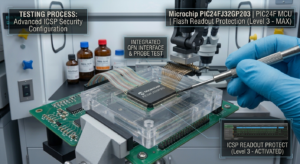
| Microchip PIC 12/16/18/24 | Code-protect (CP / GCP) bits | Blocked when set | Yes, but erases program memory |
| NXP LPC / Kinetis | CRP 1–3 / Flash security byte | Blocked from CRP2 | CRP1–2 partly; CRP3 no |
| Espressif ESP32 | eFuse encryption + secure boot | Ciphertext only without the key | No, once fused |
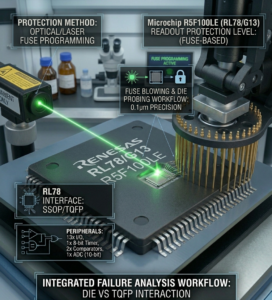
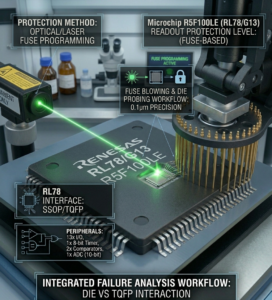
| Renesas RX / RL78 | ID code / OCD security lock | Blocked when enabled | Varies by sub-family |
Two details separate an easy evaluation from a hard one: whether protection only blocks reading or also encrypts content, and whether the key sits on the same die.
برای افرادی که مسئول نگهداری محصولات قدیمی (Legacy) یا سیستمهای قفلشده هستند، این تنظیمات معمولاً مسیر ادامه کار را مشخص میکند: اینکه آیا شروع یک پروژه بازیابی Firmware ارزش دارد، چه مدت زمان نیاز خواهد داشت، یا اینکه آیا تنها گزینه جایگزین، طراحی مجدد کامل برد خواهد بود. بررسی صحیح وضعیت محافظت پیش از اختصاص بودجه، تفاوت بین یک فرآیند معمولی خواندن اطلاعات و یک مسیر بدون نتیجه را مشخص میکند.
A Five-Point Evaluation Checklist
Before scoping any recovery, confirm these in order:
- Exact die revision. The same part number from different years can carry different security implementations.
- Protection state, not just the part number. “STM32F407” says little; “STM32F407, RDP Level 1” says a great deal.
- Single-tier or multi-tier. Single-fuse devices degrade gracefully; multi-level parts combine lock bits with a disabled debug port.
- Whether encryption is in play. Read protection and flash encryption are separate; defeating one still leaves ciphertext.
- Prior tamper attempts. A previously opened or overheated die narrows the options sharply.
بالنسبة إلى من يقومون بصيانة المنتجات القديمة (Legacy) أو الأنظمة المقفلة، فإن هذا الإعداد غالبًا ما يحدد الخطوات التالية: ما إذا كان مشروع استعادة الـ Firmware يستحق البدء، والمدة المطلوبة لتنفيذه، أو ما إذا كان البديل الوحيد هو إعادة تصميم اللوحة الإلكترونية بالكامل. إن تحليل حالة الحماية بشكل صحيح قبل تخصيص الميزانية يميز بين عملية قراءة بيانات عادية وحالة لا يمكن الوصول فيها إلى نتيجة عملية.
What Actually Drives Cost and Timeline
An evaluation ends in a feasibility judgement. The criteria stay consistent:
- Access route. Debug port, bootloader, or die-level access — the last is both the most destructive and the most expensive.
- Whether the sample must survive. Projects needing the part returned working are limited to non-destructive routes.
Bagi pihak yang melakukan pemeliharaan terhadap produk lama (legacy) atau sistem yang terkunci, konfigurasi ini biasanya menentukan langkah selanjutnya: apakah proyek pemulihan firmware layak dilakukan, berapa lama waktu yang diperlukan, atau apakah solusi alternatifnya adalah melakukan desain ulang seluruh papan sirkuit. Memahami kondisi perlindungan secara tepat sebelum mengalokasikan anggaran akan membedakan antara proses pembacaan data yang normal dan situasi yang berakhir tanpa solusi.
FAQ
Is readout protection the same as encryption?
No. Read protection blocks access to memory; encryption protects the meaning of what is read. Some devices use both.
Can the strongest protection level be reversed?
Vendor documentation defines the top tier, such as STM32 RDP Level 2, as irreversible: option bytes are frozen and debug is hardware-disabled.
Is recovering my own device’s firmware legal?
Evaluating a Locked Part?
Send us the part number, package type and any protection details. We will confirm the feasible route and realistic outcome before you commit a budget — under NDA, and only for parts you are authorized to work on.