
Extract MCU PIC16C505 Code focuses on retrieving embedded firmware from a secured and often locked microcontroller when no original development files remain available. The PIC16C505 is based on OTP program memory, meaning its firmware is permanently written into the chip and cannot be erased or reprogrammed. When system documentation, source code, or binary archives are lost, engineers must rely on reverse engineering techniques to open access to the device, extract a reliable memory dump, and recover a structured heximal file. The objective is to restore the firmware archive in a way that preserves the exact logic and timing of the original program stored within the microprocessor, ensuring usability for future applications.
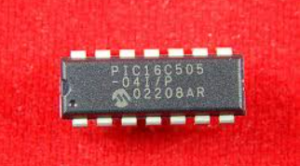
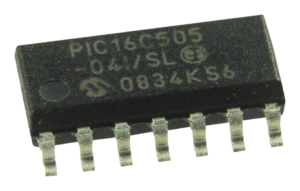
The PIC16C505 microcontroller is designed as a low-cost yet versatile 8-bit MCU, offering a modest set of features including general-purpose I/O, internal oscillator, timer functions, and a streamlined instruction set. Compared to smaller PIC12 series devices, it provides expanded program memory and improved flexibility for embedded control applications. This chip has been widely deployed in consumer electronics, small industrial control systems, automotive peripheral modules, power regulation devices, and basic automation equipment. In these use cases, the firmware embedded in the chip serves as a fixed program archive, controlling system operations, input/output processing, and device behavior with high reliability.
The USART Transmit Data Buffer Register and USART Receive Data Buffer Registers share the same I/O address referred to as USART Data Register or UDRn. The Transmit Data Buffer Register (TXB) will be the destination for data written to the UDRn Register location. Reading the UDRn Register location will return the contents of the Receive Data Buffer Register (RXB). For 5-, 6-, or 7-bit characters the upper unused bits will be ignored by the Transmitter and set to zero by the Receiver. The transmit buffer can only be written when the UDREn Flag in the UCSRnA Register is set. Data written to UDRn when the UDREn Flag is not set, will be ignored by the USART Transmitter.
When data is written to the transmit buffer, and the Transmitter is enabled, the Transmitter will load the data into the Transmit Shift Register when the Shift Register is empty. Then the data will be serially transmitted on the TxDn pin. The receive buffer consists of a two level FIFO. The FIFO will change its state whenever the receive buffer is accessed. Due to this behavior of the receive buffer, do not use Read-Modify-Write instructions (SBI and CBI) on this location.
Be careful when using bit test instructions (SBIC and SBIS), since these also will change the state of the FIFO. This flag bit is set when there are unread data in the receive buffer and cleared when the receive buffer is empty (i.e., does not contain any unread data). If the Receiver is disabled, the receive buffer will be flushed and consequently the RXCn bit will become zero. The RXCn Flag can be used to generate a Receive Complete interrupt (see description of the RXCIEn bit).
This flag bit is set when the entire frame in the Transmit Shift Register has been shifted out and there are no new data currently present in the transmit buffer (UDRn). The TXCn Flag bit is automatically cleared when a transmit complete interrupt is executed, or it can be cleared by writing a one to its bit location. The TXCn Flag can generate a Transmit Complete interrupt (see description of the TXCIEn bit). The UDREn Flag indicates if the transmit buffer (UDRn) is ready to receive new data. If UDREn is one, the buffer is empty, and therefore ready to be written. The UDREn Flag can generate a Data Register Empty interrupt (see description of the UDRIEn bit). UDREn is set after a reset to indicate that the Transmitter is ready.
Extract MCU PIC16C505 Code operations often involve complex scenarios where engineers must hack into a protected or locked chip to extract, recover, restore, and reverse engineer firmware from its internal program memory. Because the MCU is secured against direct access, extracting a consistent binary dump requires overcoming built-in protection mechanisms while maintaining data integrity. The process includes reconstructing a complete heximal file, organizing the firmware archive, and ensuring the recovered program accurately represents the original memory structure. Challenges include handling the limitations of OTP architecture, managing potential read restrictions, and avoiding corruption during the extraction process. These constraints demand precise technical execution when attempting to open and recover the contents of the chip.
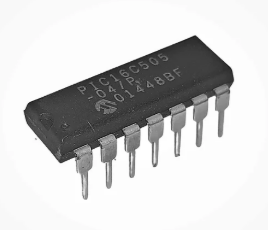
The ability to recover firmware from a PIC16C505 microcontroller provides significant advantages for clients dealing with legacy systems and discontinued products. By restoring a usable binary or program file, organizations can replicate existing MCU configurations, maintain operational continuity, and extend the lifecycle of their equipment. The recovered firmware archive also enables reverse engineering analysis, allowing engineers to interpret system logic, validate performance, and reconstruct missing source code when required. This approach reduces redevelopment costs, minimizes downtime, and preserves valuable intellectual property embedded within the chip. Ultimately, Extract MCU PIC16C505 Code transforms a secured and inaccessible microcontroller into a reusable engineering asset, supporting long-term sustainability across various embedded industries.