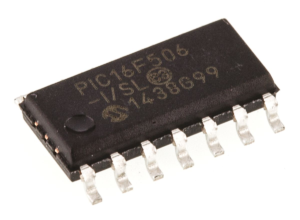
The PIC16F506 microcontroller is a compact and efficient 8-bit MCU widely used in embedded designs that require reliable control with minimal hardware overhead. Equipped with on-chip flash program memory, internal oscillator options, and flexible I/O configuration, this chip is frequently deployed in consumer appliances, battery-powered devices, automotive electronics, and small-scale industrial controllers. Its architecture is optimized for deterministic execution, making it suitable for long-life applications. In many commercial implementations, however, the PIC16F506 is configured as secured or locked, meaning the firmware, program logic, and memory data are protected from direct access. This protection prevents unauthorized duplication but also makes it difficult to open or retrieve the binary or heximal file stored inside the microcontroller.
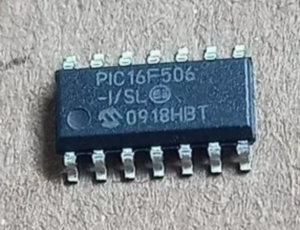
In real-world scenarios, the requirement to hack, extract, recover, restore, or reverse engineering a secured PIC16F506 often emerges when original firmware, source code, or program archive has been lost. Many legacy systems continue to rely on this MCU, yet their design documentation and backup files are no longer available. Extracting a binary dump from the chip involves accessing its protected memory regions, including flash and EEPROM, where critical program instructions and data are stored. Engineers must carefully recover the firmware, file structures, and memory contents to rebuild a usable archive. The process is focused on ensuring that the extracted data remains complete and consistent, enabling accurate reconstruction of the microcontroller’s functionality.
Random read operations allow the master to access any memory location in a random manner. To perform this type of read operation, first the word address must be set. This is done by sending the word address to the device as part of a write operation.
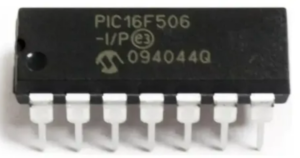
What sets a microcontroller apart from other processors are special circuits to deal with the needs of real-time applications. The PIC16F506 family of microcontrollers has a host of such features intended to maximize system reliability, minimize cost through elimination of external components, provide power saving operating modes and offer code protection.
These features are:
- Oscillator selection
- Reset
– Power-On Reset (POR)
– Device Reset Timer (DRT)
– Wake-up from SLEEP on pin change
- Watchdog Timer (WDT)
- SLEEP
- Code protection
- ID locations
- In-circuit Serial Programming
The PIC16F506 has a Watchdog Timer which can be shut off only through configuration bit WDTE. It runs off of its own RC oscillator for added reliability.
If using XT or LP selectable oscillator options, there is always an 18 ms (nominal) delay provided by the Device Reset Timer (DRT), intended to keep the chip in reset until the crystal oscillator is stable. If using INTRC or EXTRC there is an 18 ms delay only on VDD power-up. With this timer on-chip, most applications need no external reset circuitry. The SLEEP mode is designed to offer a very low current power-down mode. The user can wake-up from SLEEP through a change on input pins or through a Watchdog Timer time-out.
Several oscillator options are also made available to allow the part to fit the application, including an internal 4 MHz oscillator. The EXTRC oscillator option saves system cost while the LP crystal option saves power. A set of configuration bits are used to select various options. The PIC16F506 configuration word consists of 12 bits. Configuration bits can be programmed to select various device configurations. Two bits are for the selection of the oscillator type, one bit is the Watchdog Timer enable bit, and one bit is the MCLR enable bit.
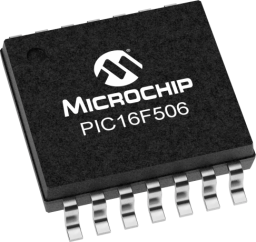
From a technical perspective, reading MCU PIC16F506 flash from a secured, protected, encrypted, or locked chip requires addressing multiple layers of built-in security. To hack, extract, recover, open, restore, or reverse engineering the MCU, specialists must work around read-protection mechanisms that block access to firmware, source code, binary, heximal program file, and internal memory data. The microcontroller’s flash architecture may restrict direct dumping, making it necessary to apply controlled techniques to retrieve a reliable archive. During extraction, maintaining the integrity of the firmware dump, memory mapping, and program structure is essential. Challenges such as partial data retrieval, signal instability, and risk of corruption must be carefully managed to ensure that the recovered file accurately reflects the original MCU behavior.
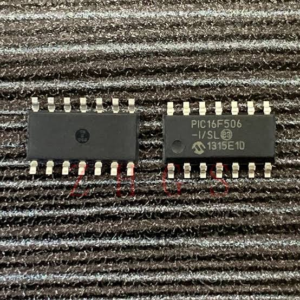
Successfully extracting and restoring data from a PIC16F506 microcontroller provides significant benefits for clients operating legacy or mission-critical systems. By recovering firmware, binary files, and source code archives, companies can duplicate or replicate the original program, allowing continued maintenance, repair, and production. Reverse engineering also enables engineers to analyze the internal logic, optimize performance, and migrate functionality to modern microcontroller or microprocessor platforms. This capability reduces downtime, minimizes replacement costs, and extends the lifecycle of existing hardware. Ultimately, reading and restoring flash data from a protected MCU transforms otherwise inaccessible program information into a valuable asset, empowering businesses to sustain operations and maintain full control over their embedded technology.