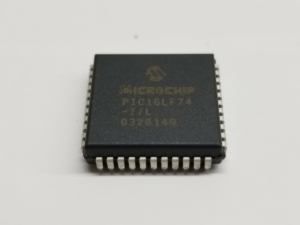
The PIC16LF74 is a specialized, low-power version of the standard 8-bit MCU architecture, designed specifically for environments where energy efficiency is paramount. This microcontroller is a staple in battery-powered instrumentation, portable wireless data loggers, and wearable medical devices that require a wide operating voltage and minimal current draw. With its 40-pin package, it offers a high degree of peripheral flexibility, including an 8-channel ADC and a significant flash program memory capacity. In professional deployments, this chip is almost universally configured as a secured or locked device. This hardware-level “Code Protection” is implemented to shield the internal firmware and sensitive data archive from external access, ensuring that the microprocessor remains an impenetrable vault for the manufacturer’s intellectual property. However, when these devices become obsolete or documentation is lost, the technical necessity to Extract IC PIC16LF74 Code arises as a critical requirement for industrial survival.
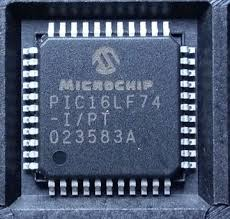
High performance RISC CPU
- Only 35 single word instructions to learn
- All single cycle instructions except for program branches which are two-cycle
- Operating speed: DC – 20 MHz clock input DC – 200 ns instruction cycle
- Up to 8K x 14 words of FLASH Program Memory, Up to 368 x 8 bytes of Data Memory (RAM)
- Pinout compatible to the PIC16LF74
- Pinout compatible to the PIC16LF74
- Interrupt capability (up to 12 sources)
- Eight level deep hardware stack
- Direct, Indirect and Relative Addressing modes
- Brown-out detection circuitry for
- Parallel Slave Port (PSP), 8-bits wide
- Universal Synchronous Asynchronous Receiver
- 8-bit, up to 8-channel Analog-to-Digital converter
- Synchronous Serial Port (SSP) with SPI (Master
- Timer2: 8-bit timer/counter with 8-bit period
- Timer0: 8-bit timer/counter with 8-bit prescaler
- Timer1: 16-bit timer/counter with prescaler,
- Programmable code protection
- Power saving SLEEP mode
- Selectable oscillator options
- In-Circuit Serial Programming (ICSP) via two
- Watchdog Timer (WDT) with its own on-chip RC
- Power-on Reset (POR)
- Power-up Timer (PWRT) and Processor read access to program memory Oscillator Start-up Timer (OST) oscillator for reliable operation pins can be incremented during SLEEP via external crystal/clock register, prescaler and postscaler
- Watchdog Timer (WDT) with its own on-chip RC
- Two Capture, Compare, PWM modules
– Capture is 16-bit, max. resolution is 12.5 ns
– Compare is 16-bit, max. resolution is 200 ns
– PWM max. resolution is 10-bit mode) and I2C (Slave) Transmitter (USART/SCI) external RD, WR and CS controls (40/44-pin only) Brown-out Reset (BOR)
- Timer2: 8-bit timer/counter with 8-bit period
- Universal Synchronous Asynchronous Receiver
- Parallel Slave Port (PSP), 8-bits wide
- Brown-out detection circuitry for
-
Low power, high speed CMOS FLASH technology
Fully static design
Wide operating voltage range: 2.0V to 5.5V
High Sink/Source Current: 25 mA
Industrial temperature range
Low power consumption:
– < 2 mA typical @ 5V, 4 MHz
– 20 µA typical @ 3V, 32 kHz
– < 1 µA typical standby current
The engineering challenge to open a protected microprocessor and recover its internal logic involves navigating a complex web of silicon-based security fuses. To successfully hack or extract the binary file from a secured PIC16LF74, specialists must employ advanced reverse engineering techniques that bypass the chip’s internal refusal to communicate its memory contents. The primary difficulty lies in the fact that the MCU is designed to return a blank dump or initiate a full erase of the flash and EEPROM if an unauthorized read command is detected. To restore access to the program without damaging the underlying data, one must manipulate the chip at a signal level where the locked state can be momentarily neutralized. This allows for a clean firmware extract, enabling the technician to recover the original heximal archive and restore the source code logic into a readable file, effectively liberating the binary from its encrypted hardware cage.
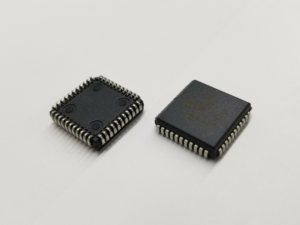
Beyond the technical hurdles, the objective behind trying to open or recover a locked program is deeply rooted in the concept of legacy preservation. In many high-stakes industries, a microcontroller may be the sole repository of a specific machine’s operational logic, especially if the original source code was lost due to corporate turnover or storage failure. If the PIC16LF74 within a critical system fails, the ability to extract the firmware from a surviving unit is the only way to restore the equipment to a functional state. By choosing to reverse engineering the protected MCU, companies can recover their lost binary data and dump it into a new archive for future-proofing. This process prevents the premature retirement of expensive industrial assets, allowing for the recovery of the heximal instructions and the subsequent restore of operations without a costly and time-consuming redesign from scratch.
For our clients, the benefits of a successful Extract IC PIC16LF74 Code service are multifaceted, offering both security and continuity. By obtaining a verified binary dump of a secured chip, businesses can perform essential security audits to ensure their firmware is not vulnerable to external threats. Furthermore, it allows for the recovery of unique calibration data stored in the EEPROM, which is often essential for the precision of medical or scientific instruments. This service transforms a locked and encrypted microprocessor into a transparent resource, providing a definitive archive of the device’s digital intelligence. Whether the goal is to restore a legacy production line, recover lost source code, or simply create a backup file for an aging MCU, our ability to extract and reverse engineering these complex chips ensures that your technical investments are permanently protected and always recoverable.