
Read IC ATmega1284 Code

Recover MCU ATmega1284 heximal is a professional service focused on retrieving binary and heximal firmware files from a secured and locked ATmega1284 microcontroller. In embedded system environments, the firmware stored inside flash memory and EEPROM defines the full operational logic of the product, from communication protocols to motion control algorithms. When the chip is protected or encrypted through security fuse settings, conventional programmers cannot open or read the internal memory space. In these cases, structured reverse engineering techniques are required to extract, recover, and restore a complete binary dump from the MCU without compromising data integrity. The purpose is to rebuild a reliable firmware archive that reflects the original program structure stored within the microprocessor.
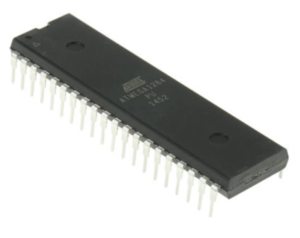
Recover MCU Microchip ATmega1284 heximal projects often arise when a secured, protected, or locked chip must be accessed to recover lost firmware or restore discontinued production. Attempting to hack or open a protected Microchip ATmega1284 microcontroller can be extremely challenging. Security fuse bits may prevent readout of flash and EEPROM memory, and some configurations trigger automatic erase cycles if unauthorized access is detected. Reverse engineering the Microchip ATmega1284 microcontroller requires carefully controlled procedures to extract a consistent binary dump from flash program memory and EEPROM data areas while preserving encrypted or protected segments. Technical obstacles include bypassing locked read-protection mechanisms, stabilizing clock and voltage conditions, avoiding corruption of Microchip ATmega1284 secured MCU's firmware data, and reconstructing a valid heximal file from raw memory content. The objective is not simply to copy data, but to recover a complete firmware archive that can be analyzed, verified, and potentially restored into a compatible Microchip ATmega1284 MCU environment.
Recover MCU Microchip ATmega1284 heximal projects often arise when a secured, protected, or locked chip must be accessed to recover lost firmware or restore discontinued production. Attempting to hack or open a protected Microchip ATmega1284 microcontroller can be extremely challenging. Security fuse bits may prevent readout of flash and EEPROM memory, and some configurations trigger automatic erase cycles if unauthorized access is detected. Reverse engineering the Microchip ATmega1284 microcontroller requires carefully controlled procedures to extract a consistent binary dump from flash program memory and EEPROM data areas while preserving encrypted or protected segments. Technical obstacles include bypassing locked read-protection mechanisms, stabilizing clock and voltage conditions, avoiding corruption of Microchip ATmega1284 secured MCU’s firmware data, and reconstructing a valid heximal file from raw memory content. The objective is not simply to copy data, but to recover a complete firmware archive that can be analyzed, verified, and potentially restored into a compatible Microchip ATmega1284 MCU environment.

The ATmega1284 microcontroller is widely valued for its expanded memory capacity and versatile peripheral set within the AVR 8-bit architecture. It provides large flash program memory, substantial EEPROM storage, and increased SRAM compared to smaller MCU variants. Integrated features include dual USART interfaces, SPI, TWI (I²C), timers with PWM output, ADC channels, watchdog functionality, and numerous configurable I/O pins. These characteristics make the ATmega1284 chip suitable for industrial automation controllers, intelligent power distribution units, communication gateways, agricultural monitoring equipment, robotics platforms, and complex consumer devices. In these deployments, the MCU acts as the core microprocessor, executing firmware instructions stored in flash while managing real-time data flow between sensors, actuators, and external modules. The internal memory layout effectively serves as a digital archive of the system’s operational intelligence.

All AVR ports have true Read-Modify-Write functionality when used as general digital I/O ports. This means that the direction of one port pin can be changed without unintentionally changing the direction of any other pin with the SBI and CBI instructions.
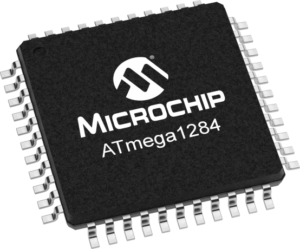
마이크로칩 ATmega1284 마이크로컨트롤러(MCU)의 헥시멀 파일 복구 프로젝트는 보안, 보호 또는 잠금 처리된 칩에 접근하여 손실된 펌웨어를 복구하거나 단종된 제품을 복원해야 할 때 자주 발생합니다. 보호된 마이크로칩 ATmega1284 마이크로컨트롤러를 해킹하거나 개방하는 것은 매우 어렵습니다. 보안 퓨즈 비트로 인해 플래시 메모리와 EEPROM 메모리 읽기가 차단될 수 있으며, 일부 구성에서는 무단 접근이 감지되면 자동으로 데이터가 삭제됩니다. 마이크로칩 ATmega1284 마이크로컨트롤러를 역설계하려면 암호화되거나 보호된 부분을 보존하면서 플래시 프로그램 메모리와 EEPROM 데이터 영역에서 일관된 바이너리 덤프를 추출하기 위한 신중하게 제어된 절차가 필요합니다. 기술적 난관으로는 잠금된 읽기 보호 메커니즘 우회, 클록 및 전압 조건 안정화, 마이크로칩 ATmega1284 보안 MCU의 펌웨어 데이터 손상 방지, 그리고 원시 메모리 내용에서 유효한 헥시멀 파일 재구성 등이 있습니다. 목표는 단순히 데이터를 복사하는 것이 아니라 분석, 검증 및 호환 가능한 마이크로칩 ATmega1284 MCU 환경에 복원할 수 있는 완전한 펌웨어 아카이브를 복구하는 것입니다.

The same applies when changing drive value (if configured as output) or enabling/disabling of pull-up resistors (if configured as input). Each output buffer has symmetrical drive characteristics with both high sink and source capability. The pin driver is strong enough to drive LED displays directly.

All port pins have individually selectable pull-up resistors with a supply-voltage invariant resistance. All I/O pins have protection diodes to both VCC and Ground as indicated in Figure 33. Refer to “Electrical Characteristics” on page 367 for a complete list of parameters.

All registers and bit references in this section are written in general form. A lower case “x” represents the numbering letter for the port, and a lower case “n” represents the bit number. However, when using the register or bit defines in a program, the precise form must be used.
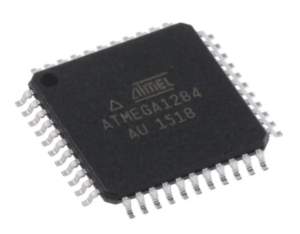
Việc khôi phục dữ liệu vi điều khiển Microchip ATmega1284 bằng mã heximal thường phát sinh khi cần truy cập vào một chip được bảo mật, bảo vệ hoặc khóa để khôi phục firmware bị mất hoặc khôi phục sản phẩm đã ngừng sản xuất. Việc cố gắng hack hoặc mở một vi điều khiển Microchip ATmega1284 được bảo vệ có thể cực kỳ khó khăn. Các bit cầu chì bảo mật có thể ngăn chặn việc đọc bộ nhớ flash và EEPROM, và một số cấu hình sẽ kích hoạt chu kỳ xóa tự động nếu phát hiện truy cập trái phép. Phân tích ngược vi điều khiển Microchip ATmega1284 đòi hỏi các quy trình được kiểm soát cẩn thận để trích xuất một bản sao nhị phân nhất quán từ bộ nhớ chương trình flash và các vùng dữ liệu EEPROM trong khi vẫn bảo toàn các phân đoạn được mã hóa hoặc bảo vệ. Các trở ngại kỹ thuật bao gồm việc vượt qua các cơ chế bảo vệ đọc bị khóa, ổn định điều kiện xung nhịp và điện áp, tránh làm hỏng dữ liệu firmware được bảo mật của Microchip ATmega1284 và tái tạo một tệp heximal hợp lệ từ nội dung bộ nhớ thô. Mục tiêu không chỉ đơn giản là sao chép dữ liệu, mà là khôi phục một kho lưu trữ firmware hoàn chỉnh có thể được phân tích, xác minh và có khả năng khôi phục vào môi trường MCU Microchip ATmega1284 tương thích.

For example, PORTB3 for bit no. 3 in Port B, here documented generally as PORTxn. The physical I/O Registers and bit locations are listed in “Register Description for I/O-Ports” on page 112.

Three I/O memory address locations are allocated for each port, one each for the Data Register – PORTx, Data Direction Register – DDRx, and the Port Input Pins – PINx. The Port Input Pins I/O location is read only, while the Data Register and the Data Direction Register are read/write. However, writing a logic one to a bit in the PINx Register, will result in a toggle in the corresponding bit in the Data Register.

In addition, the Pull-up Disable – PUD bit in MCUCR disables the pull-up function for all pins in all ports when set. Using the I/O port as General Digital I/O is described in “Ports as General Digital I/O” on page 82. Most port pins are multiplexed with alternate functions for the peripheral features on the device.

How each alternate function interferes with the port pin is described in “Alternate Port Functions” on page 86. Refer to the individual module sections for a full description of the alternate functions.

Note that enabling the alternate function of some of the port pins does not affect the use of the other pins in the port as general digital I/O. The ports are bi-directional I/O ports with optional internal pull-ups. Figure 34 shows a functional description of one I/O-port pin, here generically called Pxn.
MCU Microchip ATmega1284 16 進数プロジェクトを復元することは、多くの場合、失われたファームウェアを復元するため、または製造中止になった製品を復元するために、セキュリティ保護、保護、またはロックされたチップにアクセスする必要がある場合に発生します。保護された Microchip ATmega1284 マイクロコントローラをハッキングまたは開こうとすることは、非常に困難です。セキュリティ ヒューズ ビットは、フラッシュおよび EEPROM メモリの読み取りを妨げる可能性があり、一部の構成では、不正アクセスが検出されると自動消去サイクルがトリガーされます。Microchip ATmega1284 マイクロコントローラのリバース エンジニアリングには、暗号化または保護されたセグメントを保持しながら、フラッシュ プログラム メモリと EEPROM データ領域から一貫性のあるバイナリ ダンプを抽出するために、慎重に管理された手順が必要です。技術的な障害には、ロックされた読み取り保護メカニズムのバイパス、クロックと電圧状態の安定化、Microchip ATmega1284 のセキュリティ保護された MCU のファームウェア データの破損の回避、生のメモリ内容からの有効な 16 進数ファイルの再構築などがあります。目的は、単にデータをコピーすることではなく、分析、検証し、互換性のある Microchip ATmega1284 MCU 環境に復元できる完全なファームウェア アーカイブを復元することです。

Each port pin consists of three register bits: DDxn, PORTxn, and PINxn. As shown in “Register Description for I/O-Ports” on page 112, the DDxn bits are accessed at the DDRx I/O address, the PORTxn bits at the PORTx I/O address, and the PINxn bits at the PINx I/O address.

Recover MCU ATmega1284 heximal projects often arise when a secured, protected, or locked chip must be accessed to recover lost firmware or restore discontinued production. Attempting to hack or open a protected microcontroller can be extremely challenging. Security fuse bits may prevent readout of flash and EEPROM memory, and some configurations trigger automatic erase cycles if unauthorized access is detected. Reverse engineering the ATmega1284 requires carefully controlled procedures to extract a consistent binary dump from flash program memory and EEPROM data areas while preserving encrypted or protected segments. Technical obstacles include bypassing locked read-protection mechanisms, stabilizing clock and voltage conditions, avoiding corruption of firmware data, and reconstructing a valid heximal file from raw memory content. The objective is not simply to copy data, but to recover a complete firmware archive that can be analyzed, verified, and potentially restored into a compatible MCU environment.
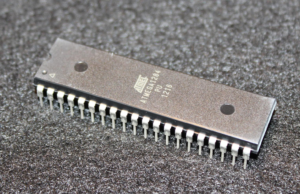
MCU माइक्रोचिप ATmega1284 हेक्सिमल प्रोजेक्ट्स को रिकवर करने के लिए अक्सर तब काम आता है जब खोए हुए फर्मवेयर को रिकवर करने या बंद हुए प्रोडक्शन को रिस्टोर करने के लिए किसी सिक्योर्ड, प्रोटेक्टेड या लॉक्ड चिप को एक्सेस करना होता है। किसी प्रोटेक्टेड माइक्रोचिप ATmega1284 माइक्रोकंट्रोलर को हैक करने या खोलने की कोशिश करना बहुत मुश्किल हो सकता है। सिक्योरिटी फ्यूज बिट्स फ्लैश और EEPROM मेमोरी को रीडआउट होने से रोक सकते हैं, और कुछ कॉन्फ़िगरेशन बिना इजाज़त एक्सेस का पता चलने पर ऑटोमैटिक इरेज़ साइकिल को ट्रिगर करते हैं। माइक्रोचिप ATmega1284 माइक्रोकंट्रोलर की रिवर्स इंजीनियरिंग के लिए फ्लैश प्रोग्राम मेमोरी और EEPROM डेटा एरिया से एक जैसा बाइनरी डंप निकालने के लिए सावधानी से कंट्रोल किए गए प्रोसेस की ज़रूरत होती है, साथ ही एन्क्रिप्टेड या प्रोटेक्टेड सेगमेंट को भी बचाकर रखना होता है। टेक्निकल रुकावटों में लॉक्ड रीड-प्रोटेक्शन मैकेनिज्म को बायपास करना, क्लॉक और वोल्टेज कंडीशन को स्टेबल करना, माइक्रोचिप ATmega1284 सिक्योर्ड MCU के फर्मवेयर डेटा को खराब होने से बचाना, और रॉ मेमोरी कंटेंट से एक वैलिड हेक्सिमल फ़ाइल को फिर से बनाना शामिल है। इसका मकसद सिर्फ़ डेटा कॉपी करना नहीं है, बल्कि एक पूरा फर्मवेयर आर्काइव रिकवर करना है जिसे एनालाइज़, वेरिफ़ाई किया जा सके, और शायद एक कम्पैटिबल माइक्रोचिप ATmega1284 MCU एनवायरनमेंट में रीस्टोर किया जा सके।

The ability to recover and restore ATmega1284 firmware delivers substantial strategic value to clients. By extracting a validated binary file or heximal dump from a protected chip, companies can resume production, maintain legacy systems, and migrate embedded designs to updated hardware platforms without rewriting the entire source code from scratch. Access to recovered program memory enables firmware analysis, troubleshooting, compliance verification, and long-term support planning. Instead of facing costly redevelopment or product discontinuation, organizations can leverage restored data archives to protect intellectual property and extend equipment lifecycle. Ultimately, recover MCU ATmega1284 heximal services transform a locked and inaccessible microcontroller into a recoverable technical asset, strengthening operational continuity and preserving the investment embedded within secured firmware systems.