
Copy IC ATmega169PV Heximal focuses on the controlled duplication and recovery of firmware data from a secured ATmega169PV microcontroller when direct readout is restricted. In embedded system servicing, the firmware stored inside flash memory represents the complete operational blueprint of a device, while EEPROM retains essential configuration data and system parameters. When a chip is configured as locked, protected, or encrypted, conventional tools cannot open the internal memory to access the binary or heximal program file. In such scenarios, advanced reverse engineering methodologies are applied to extract and recover the firmware archive from the MCU. The goal is not only to obtain a usable binary dump, but also to preserve the logical structure of the program memory so it can be restored accurately for further application.
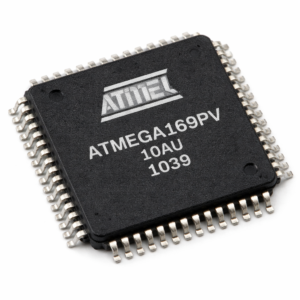
Copy IC ATmega169PV Heximal out and reprogramme the firmware into blank Microcontroller ATmega169PV, use chemical solution to dissolve the silicon package of MCU and get access to the internal structure of Microprocessor when reverse engineering microcontroller;
The phase correct Pulse Width Modulation or phase correct PWM mode (WGMn3:0 = 1, 2, 3, 10, or 11) provides a high resolution phase correct PWM waveform generation option. The phase correct PWM mode is, like the phase and frequency correct PWM mode, based on a dual-slope operation. The counter counts repeatedly from BOTTOM (0x0000) to TOP and then from TOP to BOTTOM.
In non-inverting Compare Output mode, the Output Compare (OCnx) is cleared on the compare match between TCNTn and OCRnx while upcounting, and set on the compare match while downcounting.
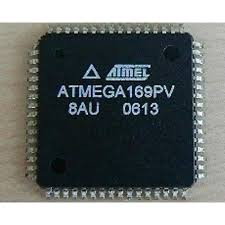
The ATmega169PV is a low-power variant within the AVR microcontroller family, engineered for energy-efficient embedded applications. It offers integrated flash program memory, EEPROM, and SRAM, along with a rich set of peripherals including SPI, USART, TWI interfaces, timers, PWM outputs, ADC channels, and a built-in LCD controller for direct display driving.
This unique combination makes the chip particularly suitable for battery-powered instruments, handheld measurement devices, smart metering systems, portable medical equipment, and compact industrial control panels. In these deployments, the microcontroller serves as the central microprocessor, executing firmware instructions and handling real-time data processing. The internal memory of the chip effectively acts as a structured data archive containing the firmware, system logic, and operational parameters required for stable performance.
In inverting Output Compare mode, the operation is inverted. The dual-slope operation has lower maximum operation frequency than single slope operation. However, due to the symmetric feature of the dual-slope PWM modes, these modes are preferred for motor control applications.
The PWM resolution for the phase correct PWM mode can be fixed to 8-, 9-, or 10-bit, or defined by either ICRn or OCRnA. The minimum resolution allowed is 2-bit (ICRn or OCRnA set to 0x0003), and the maximum resolution is 16-bit (ICRn or OCRnA set to MAX).
The PWM resolution in bits can be calculated by using the following equation: In phase correct PWM mode the counter is incremented until the counter value matches either one of the fixed values 0x00FF, 0x01FF, or 0x03FF (WGMn3:0 = 1, 2, or 3), the value in ICRn (WGMn3:0 = 10), or the value in OCRnA (WGMn3:0 = 11).
The counter has then reached the TOP and changes the count direction. The TCNTn value will be equal to TOP for one timer clock cycle. The timing diagram for the phase correct PWM mode is shown on Figure 56. The figure shows phase correct PWM mode when OCRnA or ICRn is used to define TOP.
The TCNTn value is in the timing diagram shown as a histogram for illustrating the dual-slope operation. The diagram includes non-inverted and inverted PWM outputs. The small horizontal line marks on the TCNTn slopes represent compare matches between OCRnx and TCNTn. The OCnx Interrupt Flag will be set when a compare match occurs.
The Timer/Counter Overflow Flag (TOVn) is set each time the counter reaches BOTTOM. When either OCRnA or ICRn is used for defining the TOP value, the OCnA or ICFn Flag is set accordingly at the same timer clock cycle as the OCRnx Registers are updated with the double buffer value (at TOP). The Interrupt Flags can be used to generate an interrupt each time the counter reaches the TOP or BOTTOM value.
Copy IC ATmega169PV Heximal operations often involve situations where engineers must hack into a secured MCU environment to extract, recover, or restore firmware from protected flash and EEPROM memory. A locked microcontroller typically enforces strict read protection, preventing any attempt to open or dump its internal program memory. In some configurations, encrypted memory regions and automatic erase responses further complicate the extraction process. Reverse engineering the ATmega169PV therefore requires a highly controlled approach to safely extract a complete binary or heximal file while preserving the integrity of the firmware archive. Engineers must carefully manage the interaction with the chip to avoid data corruption, ensuring that the recovered memory dump accurately reflects the original program structure stored within the microcontroller.
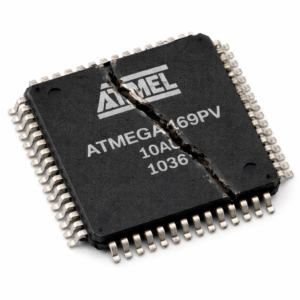
The ability to restore firmware from a protected ATmega169PV chip provides significant advantages for manufacturers and system integrators. By recovering a verified binary file or firmware archive, clients can duplicate existing MCU configurations, repair legacy hardware, and maintain continuity in production environments without redeveloping the entire source code. The recovered program memory also enables technical teams to analyze firmware behavior, validate system performance, and rebuild missing software components when necessary. This approach reduces development costs, shortens downtime, and protects valuable intellectual property embedded within the chip. Ultimately, Copy IC ATmega169PV Heximal services convert a secured and inaccessible microcontroller into a reusable engineering asset, ensuring long-term support and sustainability for embedded systems across multiple industries.