
Reading MCU ATtiny88 heximal data is a specialized reverse engineering activity focused on extracting valuable firmware and binary information from a secured microcontroller. In many legacy and industrial systems, manufacturers rely on the ATmega88 family for its balance of performance, low power consumption, and flexible peripherals. When devices reach end-of-life or documentation is lost, the ability to read, recover, or restore a locked MCU becomes essential. Through controlled and lawful reverse engineering practices, engineers can open protected memory areas and obtain critical heximal or binary files without redesigning the entire hardware platform, ensuring business continuity and technical sustainability.
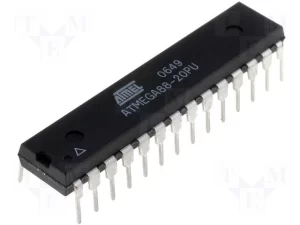
The ATmega88 microcontroller is an 8-bit AVR MCU featuring flash memory, EEPROM, SRAM, multiple timers, SPI, I²C, UART interfaces, and robust interrupt handling. It is widely deployed in industrial automation, smart meters, access control systems, consumer electronics, automotive submodules, and medical auxiliary devices. In these applications, firmware stored in flash and EEPROM defines core functionality, communication logic, and safety behavior. When the original source code or program archive is unavailable, reading the MCU memory dump becomes the only practical way to extract firmware, analyze the microprocessor behavior, and reproduce or restore the system. This is why services related to reading MCU ATtiny88 heximal data are in high demand across maintenance, refurbishment, and product redevelopment projects.
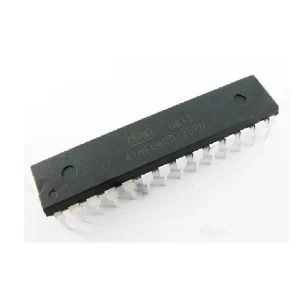
- High Performance, Low Power AVR® 8-Bit Microcontroller when Read MCU
- Advanced RISC Architecture
– 123 Powerful Instructions – Most Single Clock Cycle Execution
– 32 x 8 General Purpose Working Registers
– Fully Static Operation
High Endurance Non-volatile Memory Segments
– 4K/8K Bytes of In-System Self-Programmable Flash program memory (ATtiny48/88)
– 64/64 Bytes EEPROM (ATtiny48/88)
– 256/512 Bytes Internal SRAM (ATtiny48/88)
– Write/Erase Cycles: 10,000 Flash/100,000 EEPROM
– Data retention: 20 years at 85°C / 100 years at 25°C
– Programming Lock for Software Security
Peripheral Features
– One 8-bit Timer/Counter with Separate Prescaler and Compare Mode
– One 16-bit Timer/Counter with Prescaler, and Compare and Capture Modes
– 8-channel 10-bit ADC in 32-lead TQFP and 32-pad QFN/MLF package
– 6-channel 10-bit ADC in 28-pin PDIP and 28-pad QFN/MLF package
– Master/Slave SPI Serial Interface
– Byte-oriented 2-wire Serial Interface (Philips I2C Compatible)
– Programmable Watchdog Timer with Separate On-chip Oscillator
– On-chip Analog Comparator
– Interrupt and Wake-up on Pin Change
Special Microcontroller Features if Read MCU
– debugWIRE On-chip Debug System
– In-System Programmable via SPI Port
– Power-on Reset and Programmable Brown-out Detection
– Internal Calibrated Oscillator
– External and Internal Interrupt Sources
– Three Sleep Modes: Idle, ADC Noise Reduction and Power-down I/O and Packages after Read MCU
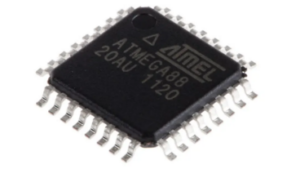
– 28 Programmable I/O Lines in 32-lead TQFP and 32-pad QFN/MLF package
– 24 Programmable I/O Lines in 28-pin PDIP and 28-pad QFN/MLF package
– 28-pin PDIP, 32-lead TQFP, 28-pad QFN/MLF and 32-pad QFN/MLF
Operating Voltage:
– 1.8 – 5.5V
Temperature Range:
– -40°C to +85°C
Speed Grade:
– 0 – 4 MHz @ 1.8 – 5.5V
– 0 – 8 MHz @ 2.7 – 5.5V
– 0 – 12 MHz @ 4.5 – 5.5V
– Active Mode: 1 MHz, 1.8V: 240µA
– Power-down Mode: 0.1µA at 1.8V
Port A is a 4-bit bi-directional I/O port with internal pull-up resistors (selected for each bit) in 32-lead TQFP and 32-pad QFN/MLF package. The PA3..0 output buffers have symmetrical drive characteristics with both high sink and source capability.
As inputs, Port A pins that are externally pulled low will source current if the pull-up resistors are activated. The Port A pins are tristated when a reset condition becomes active, even if the clock is not running.
However, the process of hacking or extracting data from a secured, protected, encrypted, or locked ATmega88 MCU presents significant technical challenges. Security fuse bits are designed to prevent unauthorized access to flash, EEPROM, and program memory, blocking direct readout through standard programmers. Additional difficulties include read-protection mechanisms, voltage sensitivity, timing constraints, and the risk of permanently erasing data during improper handling. Reverse engineering such a chip requires deep knowledge of MCU architecture, memory mapping, and secure access limitations. While it is not appropriate to disclose detailed attack methods, it is important to understand that breaking protection is a controlled engineering process rather than a simple software operation.
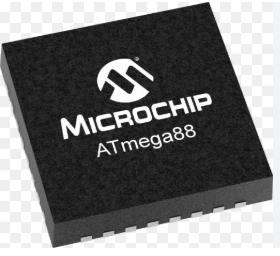
The ability to read MCU ATtiny88 heximal and extract firmware, binary, or source-level information delivers tangible value to clients. It enables product repair, long-term support, functional analysis, and compliance verification without redesigning hardware or rewriting software from scratch. By recovering archived program data from a locked microcontroller, clients can reduce costs, shorten redevelopment cycles, and protect prior R&D investments. Ultimately, reverse engineering and data extraction transform obsolete or inaccessible MCU-based systems into reusable, maintainable assets, ensuring continuity, reliability, and competitive advantage in demanding industrial and commercial environments.