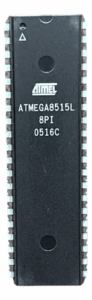
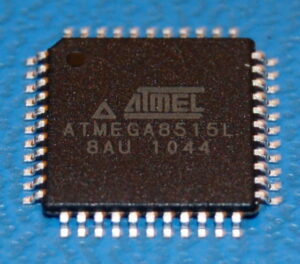
The demand to extract microcontroller ATMEGA8515L firmware has grown steadily in fields where legacy systems, industrial controllers, and embedded products depend on this specific Atmel AVR chip. The ATMEGA8515L is an 8-bit RISC-based MCU with 8KB of in-system programmable flash memory, 512 bytes of EEPROM, and 512 bytes of SRAM. It also features rich peripherals such as UART, SPI, timers, and external interrupt support, making it suitable for applications in industrial automation, consumer electronics, instrumentation devices, and even automotive control modules. Many OEM products built in the early 2000s still rely on this microcontroller, making the preservation or recovery of its firmware highly valuable.
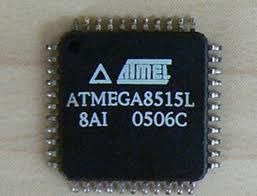
When the objective is to dump or copy the binary file or heximal archive from a secured ATMEGA8515L, engineers face considerable obstacles. The device supports lock bits and fuse settings, which can configure the MCU into a protected, encrypted, or fully locked state. In such a condition, conventional programming tools will refuse to read out the embedded program or memory contents. This prevents unauthorized cloning or duplication, but it also complicates legitimate needs such as restoring a damaged unit or migrating code from aging hardware.
Extract Microcontroller ATMEGA8515L Firmware from its secured memory which include the flash and eeprom, MCU ATmega8515L security fuse bit can be cut off by the focus ion beam technique after decapsulate the silicon package of microcontroller reverse engineering;
To crack, break, or attack these security features, specialized techniques are required. Some of the most widely researched approaches include:
-
Decapsulation of the chip package to expose the die for direct analysis. Using electron microscopes or laser probes, adversaries can observe the state of fuses or actively influence the chip during operation.
-
Fault injection attacks such as voltage glitching, clock manipulation, or electromagnetic pulse disturbances, aimed at temporarily bypassing the security mechanism during flash access cycles.
-
Side-channel analysis, where attackers attempt to decode information by analyzing variations in current consumption, timing behavior, or emitted radiation when the MCU executes protected routines.
-
Bootloader exploitation, if present and inadequately secured, can sometimes be abused to copy or recover partial segments of data.
These methods demand advanced knowledge of microelectronics, cryptography, and embedded system internals. Unlike casual hacking, extracting firmware from an encrypted and locked ATMEGA8515L is a time-intensive and equipment-heavy undertaking.
The practical outcome of such reverse engineering is a binary dump or firmware file that can then be studied, replicated, or even restored onto fresh MCUs. This enables engineers to duplicate production units, conduct source code analysis, or preserve critical legacy program archives that would otherwise be lost when original suppliers disappear.
To solve this problem, an AT90S4414/8515 compatibility mode can be selected by programming the S8515C Fuse. ATmega8515 is 100% pin compatible with AT90S4414/8515, and can replace the AT90S4414/8515 on current printed circuit boards. However, the location of Fuse bits and the electrical characteristics differs between the two devices.
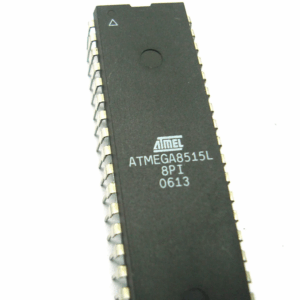
Programming the S8515C Fuse will change the following functionality: The timed sequence for changing the Watchdog Time-out period is disabled. See “Timed Sequences for Changing the Configuration of the Watchdog Timer” on page 53 for details.
The double buffering of the USART Receive Registers is disabled. See “AVR USART vs. AVR UART – Compatibility” on page 137 for details. PORTE(2:1) will be set as output, and PORTE0 will be set as input. Port A is an 8-bit bi-directional I/O port with internal pull-up resistors (selected for each bit). The Port A output buffers have symmetrical drive characteristics with both high sink and source capability when Extract MCU ATmega16 binary.
When pins PA0 to PA7 are used as inputs and are externally pulled low, they will source current if the internal pull-up resistors are activated. The Port A pins are tri-stated when a reset condition becomes active, even if the clock is not running. Port B is an 8-bit bi-directional I/O port with internal pull-up resistors (selected for each bit). The Port B output buffers have symmetrical drive characteristics with both high sink and source capability.
As inputs, Port B pins that are externally pulled low will source current if the pull-up resistors are activated. The Port B pins are tri-stated when a reset condition becomes active, even if the clock is not running. Port C is an 8-bit bi-directional I/O port with internal pull-up resistors (selected for each bit). The Port C output buffers have symmetrical drive characteristics with both high sink and source capability when Extract mcu atmega32 code.
As inputs, Port C pins that are externally pulled low will source current if the pull-up resistors are activated. The Port C pins are tri-stated when a reset condition becomes active, even if the clock is not running. Port D is an 8-bit bi-directional I/O port with internal pull-up resistors (selected for each bit). The Port D output buffers have symmetrical drive characteristics with both high sink and source capability.
What makes the ATMEGA8515L particularly challenging compared to similar AVR microcontrollers is the balance between its relatively small memory size and robust security fuses. Despite the compact flash, breaking through the secured environment involves attacking multiple defense layers simultaneously, leaving little margin for error.
In summary, the process to extract microcontroller ATMEGA8515L firmware is far from trivial. It involves advanced reverse engineering methodologies that go beyond simple copy or restore operations. Whether for industrial continuity, research, or legacy system maintenance, the effort underscores the ongoing contest between embedded system security and the ingenuity of those seeking to access the protected data hidden within.
As inputs, Port D pins that are externally pulled low will source current if the pull-up resistors are activated. The Port D pins are tri-stated when a reset condition becomes active, even if the clock is not running. Port E is an 3-bit bi-directional I/O port with internal pull-up resistors (selected for each bit).
The Port E output buffers have symmetrical drive characteristics with both high sink and source capability. As inputs, Port E pins that are externally pulled low will source current if the pull-up resistors are activated. The Port E pins are tri-stated when a reset condition becomes active, even if the clock is not running.