
Extract Microcontroller ATmega164A Code is a professional reverse engineering service aimed at reading out binary or heximal data from a secured AVR microcontroller. In many real-world cases, the original firmware, source code, or program archive of an ATmega164A-based product is no longer available due to company changes, discontinued suppliers, or long product life cycles. When a chip is protected, encrypted, or locked, conventional programming tools cannot open or access its internal memory. Through controlled and compliant reverse engineering techniques, it becomes possible to extract critical firmware data, recover lost files, and restore the functional logic embedded inside the MCU without redesigning the entire system.
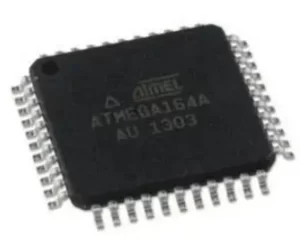
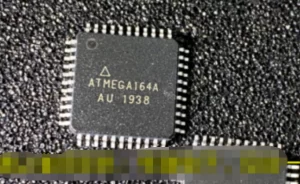
The ATmega164A is a feature-rich 8-bit AVR microcontroller known for its relatively large flash memory, EEPROM capacity, and robust peripheral set. It integrates SPI, I²C (TWI), UART, multiple timers, PWM channels, and extensive GPIO resources, making it suitable for complex embedded control tasks. This microprocessor is widely deployed in industrial controllers, power management equipment, elevator and building automation systems, communication modules, environmental monitoring devices, and mid-range consumer electronics. In these applications, the firmware stored in flash and EEPROM defines the product’s behavior, protocols, and safety logic. When maintenance, duplication, or functional upgrades are required, the ability to extract the MCU program dump becomes strategically important.
External Memory devices have different timing requirements. To meet these requirements, the XMEM interface provides four different wait-states as shown in Table 5. It is important to consider the timing specification of the External Memory device before selecting the wait-state.
The most important parameters are the access time for the external memory compared to the set-up requirement. The access time for the External Memory is defined to be the time from receiving the chip select/address until the data of this address actually is driven on the bus.
The access time cannot exceed the time from the ALE pulse must be asserted low until data is stable during a read sequence (See tLLRL+ tRLRH – tDVRH in Tables 169 through Tables 176 on pages 376 – 378) when Extract Microcontroller.
The different wait-states are set up in software. As an additional feature, it is possible to divide the external memory space in two sectors with individual wait-state settings.
This makes it possible to connect two different memory devices with different timing requirements to the same XMEM interface. For XMEM interface timing details, please refer to Table 169 to Table 176 and Figure 161 to Figure 164 in the “External Data Memory Timing” on page 376.
Note that the XMEM interface is asynchronous and that the waveforms in the following figures are related to the internal system clock. The skew between the internal and external clock (XTAL1) is not guarantied (varies between devices temperature, and supply voltage). Consequently, the XMEM interface is not suited for synchronous operation.
- Bit 7 – SRE: External SRAM/XMEM Enable
Writing SRE to one enables the External Memory Interface.The pin functions AD7:0, A15:8, ALE, WR, and RD are activated as the alternate pin functions. The SRE bit overrides any pin direction settings in the respective data direction registers. Writing SRE to zero, disables the External Memory Interface and the normal pin and data direction set-tings are used.
- Bit 6..4 – SRL2:0: Wait-state Sector Limit
It is possible to configure different wait-states for different External Memory addresses. The external memory address space can be divided in two sectors that have separate wait-state bits. The SRL2, SRL1, and SRL0 bits select the split of the sectors, see Table 4 and Figure 14.
By default, the SRL2, SRL1, and SRL0 bits are set to zero and the entire external memory address space is treated as one sector. When the entire SRAM address space is configured as one sector, the wait-states are configured by the SRW11 and SRW10 bits.
- Bit 7– XMBK: External Memory Bus-keeper Enable
Writing XMBK to one enables the bus keeper on the AD7:0 lines. When the bus keeper is enabled, AD7:0 will keep the last driven value on the lines even if the XMEM interface has tri-stated the lines. Writing XMBK to zero disables the bus keeper. XMBK is not qualified with SRE, so even if the XMEM interface is disabled, the bus keepers are still activated as long as XMBK is one.
- Bit 6..3 – Res: Reserved Bits
These bits are reserved and will always read as zero. When writing to this address location, write these bits to zero for compatibility with future devices.
- Bit 2..0 – XMM2, XMM1, XMM0: External Memory High Mask
When the External Memory is enabled, all Port C pins are default used for the high address byte. If the full 60KB address space is not required to access the External Memory, some, or all, Port C pins can be released for normal Port Pin function as described in Table 6. As described in “Using all 64KB Locations of External Memory” on page 36, it is possible to use the XMMn bits to access all 64KB locations of the External Memory.
From a technical perspective, attempting to hack or extract data from a secured ATmega164A MCU is far from trivial. Protection fuse bits are explicitly designed to block readout of program memory, EEPROM, and internal data, preventing direct access to binary or heximal files. Additional obstacles include encrypted memory regions, voltage and clock sensitivity, and the risk of triggering irreversible chip erase conditions. Reverse engineering such a protected microcontroller requires deep understanding of AVR architecture, memory organization, and protection mechanisms. While the specific methods remain confidential, the overall challenge lies in safely opening access to locked memory without damaging the chip or losing valuable firmware data.
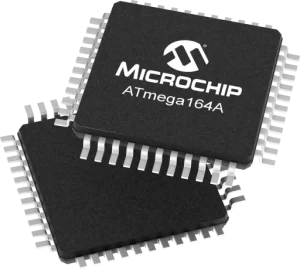
The meaning and value of extracting ATmega164A code go far beyond technical curiosity. For clients, this process enables firmware recovery, legacy product support, functional analysis, and system restoration when no backups exist. By recovering archived program data from a locked MCU, businesses can extend product life, reduce redevelopment costs, and avoid costly hardware redesigns. Extracting firmware, source-level logic, or binary files also supports compliance audits, migration to new platforms, and controlled product replication. Ultimately, professional reverse engineering of the ATmega164A microcontroller transforms inaccessible embedded data into reusable digital assets, delivering measurable commercial and engineering benefits.