
The need to recover Microcontroller AT89C5132 code often arises in scenarios involving legacy systems, lost source files, or the need to reverse-engineer existing technology. The AT89C5132, developed by Atmel, is a high-performance USB microcontroller built on the 8051 architecture, integrating a powerful 64KB flash, on-chip EEPROM, and an enhanced USB 2.0 full-speed interface. Its robust design makes it suitable for applications ranging from USB devices to consumer electronics.
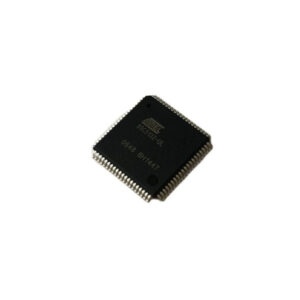
However, when this microcontroller is protected, locked, or encrypted, recovering its firmware, binary, or program data becomes a highly challenging task. The AT89C5132 features advanced code protection mechanisms — including security lock bits and boot ROM protections — that prevent unauthorized access to internal memory and flash areas.
To crack, break, or hack into a secured AT89C5132 MCU, engineers must utilize specialized reverse engineering methodologies. These may include:
-
Decapsulation and Microprobing: Removing the chip’s packaging to gain physical access to internal signals, allowing direct reads from the silicon layers.
-
Fault Injection Attacks: Using power or clock glitches to momentarily disable security logic and bypass protection.
-
Bus Snooping: Monitoring communication between the internal core and memory during power-up sequences to decode instructions or dump heximal data.
-
Electromagnetic Analysis: Observing EM leakage from the chip during operation to reconstruct encrypted operations and decrypt the embedded code.
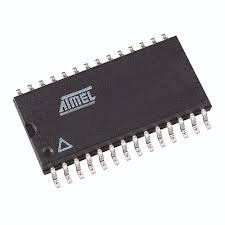
Extract Microcontroller AT89C5132 Code from MCU flash memory and eeprom, the code will include the program and data together, by recovering MCU content under unlocked status will help to clone MCU;
2 power reduction modes are implemented in the AT89C5132: the Idle mode and the Power- down mode. These modes are detailed in the following sections. In addition to these power reduction modes, the clocks of the core and peripherals can be dynamically divided by 2 using the X2 mode detailed in Section “X2 Feature”.
In order to start-up (cold reset) or to restart (warm reset) properly the microcontroller, an high level has to be applied on the RST pin. A bad level leads to a wrong initialization of the internal registers like SFRs, Program Counter… and to unpredictable behavior of the microcontroller if Extract MCU AT89LV51 Binary.
A proper device reset initializes the AT89C5132 and vectors the CPU to address 0000h. RST input has a pull-down resistor allowing power-on reset by simply connecting an external capacitor to VDD as shown in Figure 11-1. A warm reset can be applied either directly on the RST pin or indirectly by an internal reset source such as the watchdog timer. Resistor value and input characteristics are discussed in the Section “DC Characteristics” of the AT89C5132 datasheet before Extract Microcontroller at89lv52 code.
An example of bad initialization situation may occur in an instance where the bit ENBOOT in AUXR1 register is initialized from the hardware bit BLJB upon reset. Since this bit allows mapping of the bootloader in the code area, a reset failure can be critical.
If one wants the ENBOOT cleared in order to unmap the boot from the code area (yet due to a bad reset) the bit ENBOOT in SFRs may be set. If the value of Program Counter is accidently in the range of the boot memory addresses then a Flash access (write or erase) may corrupt the Flash on-chip memory.
It is recommended to use an external reset circuitry featuring power supply monitoring to prevent system malfunction during periods of insufficient power supply voltage (power supply failure, power supply switched off). Idle mode is a power reduction mode that reduces the power consumption. In this mode, program execution halts if Extract Microcontroller at89c1051 code.
Idle mode freezes the clock to the CPU at known states while the peripherals continue to be clocked (refer to Section “Oscillator”, page 12). The CPU status before entering Idle mode is preserved, i.e., the program counter and program status word register retain their data for the duration of Idle mode. The contents of the SFRs and RAM are also retained.
There are 2 ways to exit Idle mode:
- Generate an enabled interrupt.
Hardware clears IDL bit in PCON register which restores the clock to the CPU.
Execution resumes with the interrupt service routine. Upon completion of the interrupt service routine, program execution resumes with the instruction immediately following the instruction that activated Idle mode. The general-purpose flags (GF1 and GF0 in PCON register) may be used to indicate whether an interrupt occurred during normal operation or during Idle mode. When Idle mode is exited by an interrupt, the interrupt service routine may examine GF1 and GF0.
- Generate a reset.
A logic high on the RST pin clears IDL bit in PCON register directly and asynchronously. This restores the clock to the CPU. Program execution momentarily resumes with the instruction immediately following the instruction that activated the Idle mode and may continue for a number of clock cycles before the internal reset algorithm takes control.
Reset initializes the AT89C5132 and vectors the CPU to address C:0000h. The Power-down mode places the AT89C5132 in a very low power state. Power-down mode stops the oscillator and freezes all clocks at known states (refer to the Section “Oscillator”, page 12).
The CPU status prior to entering Power-down mode is preserved, i.e., the program counter, program status word register retain their data for the duration of Power-down mode. In addition, the SFRs and RAM contents are preserved. To enter Power-down mode, set PD bit in PCON register. The AT89C5132 enters the Power-down mode upon execution of the instruction that sets PD bit. The instruction that sets PD bit is the last instruction executed.
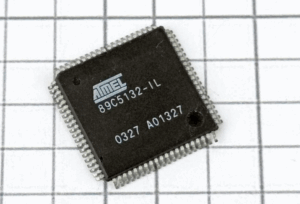
Each of these techniques carries significant complexity, requiring precision tools, cleanroom environments, and deep knowledge of embedded architecture. Unlike simpler MCUs, the AT89C5132 poses added challenges due to its integration of USB firmware and internal bootloader logic, which are often well-shielded and tightly bound to security features.
Once successful, the extracted archive, whether in binary, firmware, or source code form, can be restored, cloned, or duplicated for analysis, reprogramming, or replication of original product behavior. This capability is particularly valuable when manufacturers have discontinued the chip or when access to the original design team is no longer possible.
In conclusion, to recover Microcontroller AT89C5132 code from a secured or locked device is a highly technical feat requiring a tailored attack strategy. The blend of hardware-level complexity and software obfuscation ensures this process is not only different from simpler chip extractions but stands as one of the more intricate challenges in modern MCU reverse engineering.