
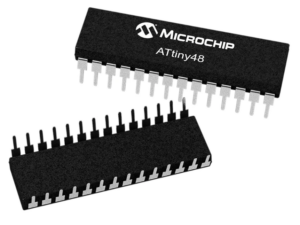
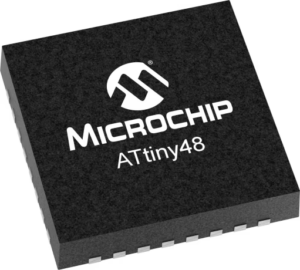
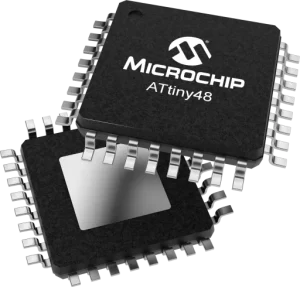
Copy Microcontroller ATtiny48 Heximal describes a professional process aimed at accessing heximal and binary data stored inside a secured ATtiny48 microcontroller. This compact AVR MCU integrates flash memory, EEPROM, and SRAM in a small-footprint chip, making it popular for cost-sensitive embedded designs. In many finished products, the internal firmware and program are intentionally protected, locked, or even partially encrypted to prevent unauthorized access. When documentation, backups, or original source code are missing, copying the internal data becomes the only realistic way to understand or maintain the system.
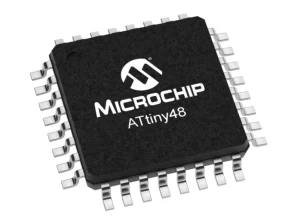
From a technical standpoint, Copy Microcontroller ATtiny48 Heximal relies on controlled reverse engineering rather than simple attempts to hack or force the device open. The objective is to extract meaningful information from flash and EEPROM, organize it into a reliable dump, and convert it into a usable archive or file format. Because protection mechanisms are specifically designed to block readout, engineers must carefully manage each step to avoid triggering erase conditions. The process focuses on accurate recover and restore of internal memory, ensuring that configuration data and logic remain consistent with the original microprocessor behavior.
During interrupts and subroutine calls, the return address Program Counter (PC) is stored on the Stack. The Stack is effectively allocated in the general data SRAM, and consequently the Stack size is only limited by the total SRAM size and the usage of the SRAM.
All user programs must initialize the SP in the Reset routine (before subroutines or interrupts are executed). The Stack Pointer (SP) is read/write accessible in the I/O space. The data SRAM can easily be accessed through the five different addressing modes supported in the AVR architecture.
The memory spaces in the AVR architecture are all linear and regular memory maps. A flexible interrupt module has its control registers in the I/O space with an additional Global Interrupt Enable bit in the Status Register. All interrupts have a separate Interrupt Vector in the Interrupt Vector table.
The interrupts have priority in accordance with their Interrupt Vector position. The lower the Interrupt Vector address, the higher the priority. The I/O memory space contains 64 addresses for CPU peripheral functions as Control Registers, SPI, and other I/O functions.
The I/O Memory can be accessed directly, or as the Data Space locations following those of the Register File, 0x20 – 0x5F. In addition, the ATtiny48 has Extended I/O space from 0x60 – 0x1FF in SRAM where only the ST/STS/STD and LD/LDS/LDD instructions can be used.
The high-performance AVR ALU operates in direct connection with all the 32 general purpose working registers. Within a single clock cycle, arithmetic operations between general purpose registers or between a register and an immediate are executed before extract mcu embedded firmware.
The ALU operations are divided into three main categories – arithmetic, logical, and bit-functions. Some implementations of the architecture also provide a powerful multiplier supporting both signed/unsigned multiplication and fractional format. See the “Instruction Set” section for a detailed description.
The Status Register contains information about the result of the most recently executed arithmetic instruction. This information can be used for altering program flow in order to perform conditional operations. Note that the Status Register is updated after all ALU operations, as specified in the Instruction Set Reference.
This will in many cases remove the need for using the dedicated compare instructions, resulting in faster and more compact code. The Status Register is not automatically stored when entering an interrupt routine and restored when returning from an interrupt. This must be handled by software.
The ATtiny48 is widely deployed in consumer electronics, smart sensors, small appliances, access control modules, lighting controllers, and industrial auxiliary boards. Its low power consumption and sufficient I/O resources make it ideal for products that operate continuously with minimal energy use. Over time, manufacturers may face discontinued components, aging hardware, or third-party systems that require duplication or repair. In these scenarios, the ability to copy firmware and calibration data from a protected MCU directly impacts the feasibility of long-term product support.
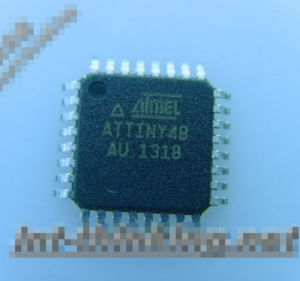
However, breaking off protection on a secured ATtiny48 is never trivial. Fuse settings, readout locks, and internal safeguards increase the difficulty and risk of data loss. This is precisely why implementation details are not casually disclosed. For clients, the value lies in the outcome: successful data recovery preserves intellectual assets, avoids expensive redesign, and enables compliant replication when legally justified. By transforming inaccessible program and memory into a structured archive, Copy Microcontroller ATtiny48 Heximal delivers practical benefits—reduced downtime, extended product lifespan, and strategic control over legacy embedded systems.