
Copy IC ATmega2561 Program from flash and EEPROM memory is a professional service aimed at retrieving a complete firmware image from a secured and protected AVR microcontroller. The ATmega2561 integrates a robust 8-bit microprocessor core with up to 256 KB of flash, sizable EEPROM, and rich peripheral sets, enabling complex embedded control. In many products, the internal program, configuration data, and operational parameters are intentionally locked or encrypted to protect intellectual property. When access is required for maintenance or continuity, controlled readout of the binary or heximal content becomes essential.
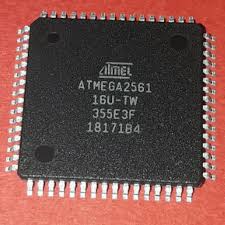
Copy IC ATmega2561 Program from its flash and eeprom memory, the fuse bit of encrypted atmel microcontroller atmega2561 has been decrypted; mcu atmega2561 will be cracked by focus ion beam;
In practice, Copy IC ATmega2561 Program from flash and EEPROM memory focuses on assembling a verified dump that reflects the original firmware state. This includes consolidating executable files, non-volatile settings, and calibration values into a structured archive suitable for validation and reuse. Such efforts may involve careful reverse engineering workflows that prioritize integrity over disruption, ensuring the extracted memory remains consistent and usable. While the terms extract, open, or recover are often used, the objective is not intrusion but preservation—turning inaccessible content into a dependable reference without compromising the original chip.
The ATmega2561 is widely deployed across industrial automation, test equipment, communication gateways, power management systems, and transportation electronics. Its high I/O count, multiple serial interfaces, and extended addressing support make it a common choice for scalable designs. Over time, however, vendors discontinue support, source code is misplaced, or system upgrades demand compatibility. In these cases, Copy IC ATmega2561 Program from flash and EEPROM memory provides a path to restore operational control, enabling cloning, migration, and long-term servicing of legacy platforms.
The device is manufactured using Atmel’s high-density nonvolatile memory technology. The On-chip ISP Flash allows the program memory to be reprogrammed in-system through an SPI serial interface, by a conventional nonvolatile memory programmer, or by an On-chip Boot program running on the AVR core.
The boot program can use any interface to download the application program in the application Flash memory. Software in the Boot Flash section will continue to run while the Application Flash section is updated, providing true Read-While-Write operation.
By combining an 8-bit RISC CPU with In-System Self-Program mable Flash on a monolithic ch ip, the Atmel ATmega2561 is a powerful microcontroller that provides a highly flexible and cost effective solution to many embedded control applications.
The ATmega2561 AVR is supported with a full suite of program and system development tools including: C compilers, macro assemblers, program debugger/simulators, in-circuit emulators, and evaluation kits after extract mcu at89c51rd2 eeprom file.
Each device in the ATmeg2561 family differs only in memory size and number of pins. Table 1 summarizes the different configurations for the six devices.
Port A is an 8-bit bi-directional I/O port with internal pull-up resistors (selected for each bit). The Port A output buffers have symmetrical drive characteristics with both high sink and source capability. As inputs, Port A pins that are externally pulled low will source current if the pull-up resistors are activated.
The Port A pins are tri-stated when a reset condition becomes active, even if the clock is not running. Port B is an 8-bit bi-directional I/O port with internal pull-up resistors (selected for each bit). The Port B output buffers have symmetrical drive characteristics with both high sink and source capability. As inputs, Port B pins that are externally pulled low will source current if the pull-up resistors are activated.
The Port B pins are tri-stated when a reset condition becomes active, even if the clock is not running. Port C is an 8-bit bi-directional I/O port with internal pull-up resistors (selected for each bit). The Port C output buffers have symmetrical drive characteristics with both high sink and source capability.
As inputs, Port C pins that are externally pulled low will source current if the pull-up resistors are activated. The Port C pins are tri-stated when a reset condition becomes active, even if the clock is not running.
Challenges arise from security features designed to resist casual hack attempts and unauthorized access. Standard tools may fail against protected devices, and improper actions can erase or corrupt valuable data. Therefore, professionals avoid revealing sensitive methods and instead emphasize validation, checksums, and documentation of the recovered program. For clients, the benefits are tangible: reduced redevelopment costs, faster time-to-market for replacements, reliable backups in a safe archive, and confidence that critical embedded knowledge is preserved rather than lost.