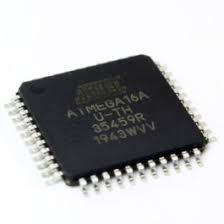
Our offering centers on authorized firmware work only — performed for device owners, integrators, or parties with explicit permission. Services include: recovery and restoration of firmware and data archives from ATmega16A devices; non-destructive extraction of available flash and EEPROM contents; binary and heximal file preservation; disassembly and high-level analysis to produce readable output; and reconstruction of lost or incomplete program files so systems can be returned to operation. We also provide formal technical reports and deliverables such as recovered binary/hex files, annotated disassembly, and guidance for safe firmware re-deployment.
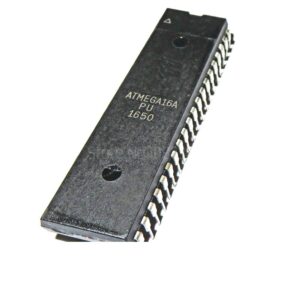
Read MCU ATmega16A Software from embedded flash memory, unlock microcontroller atmel atmega16a security fuse bit and read locked source code from atmega16a processor’s flash and eeprom memory;
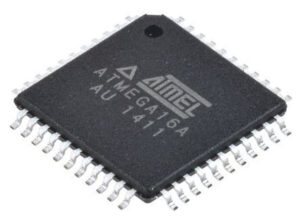
- First Analog Comparator conversion may be delayed
If the device is powered by a slow rising VCC, the first Analog Comparator conversion will take longer than expected on some devices.
Problem Fix/Workaround
When the device has been powered or reset, disable then enable theAnalog Comparator before the first conversion.
- Interrupts may be lost when writing the timer registers in the asynchronous timer
The interrupt will be lost if a timer register that is synchronized to the asynchronous timer clock is written when the asynchronous Timer/Counter register(TCNTx) is 0x00.
Problem Fix / Workaround
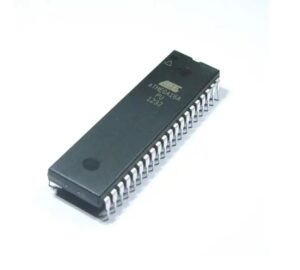
Always check that the asynchronous Timer/Counter register neither have the value 0xFF nor 0x00 before writing to the asynchronous Timer Control Register(TCCRx), asynchronous Timer Counter Register(TCNTx), or asynchronous Output Compare Register(OCRx) to crack avr microcontroller atmega16a flash memory.
- IDCODE masks data from TDI input
The JTAG instruction IDCODE is not working correctly. Data to succeeding devices are replaced by all-ones during Update-DR.
Problem Fix / Workaround
If ATmega16 is the only device in the scan chain, the problem is not visible.
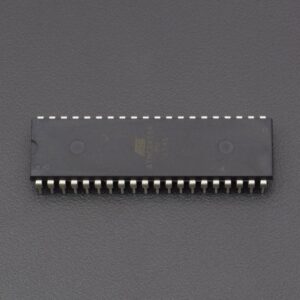
Select the Device ID Register of the ATmega16 by issuing the IDCODE instruction or by entering the Test-Logic-Reset state of the TAP controller to read out the contents of its Device ID Register and possibly data from succeeding devices of the scan chain. Issue the BYPASS instruction to the ATmega16 while reading the Device ID Registers of preceding devices of the boundary scan chain.
If the Device IDs of all devices in the boundary scan chain must be captured simultaneously, the ATmega16 must be the fist device in the chain.
- Reading EEPROM by using ST or STS to set EERE bit triggers unexpected interrupt request.
Reading EEPROM by using the ST or STS command to set the EERE bit in the EECR register triggers an unexpected EEPROM interrupt request.
Problem Fix / Workaround
Always use OUT or SBI to set EERE in EECR.
First Analog Comparator conversion may be delayed
Interrupts may be lost when writing the timer registers in the asynchronous timer IDCODE masks data from TDI input
Reading EEPROM by using ST or STS to set EERE bit triggers unexpected interrupt request
- First Analog Comparator conversion may be delayed
If the device is powered by a slow rising VCC, the first Analog Comparator conversion will take longer than expected on some devices.
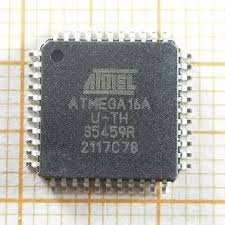
Problem Fix/Workaround when readout chip set atmega32a firmware
When the device has been powered or reset, disable then enable theAnalog Comparator before the first conversion after Read MCU.
We address tasks that clients legitimately describe with terms like restore, decode, decrypt (when legally required), copy, clone, duplicate, or open — always performed within legal and ethical boundaries. Nouns relevant to our work include firmware, binary, heximal, source code (reconstructed where possible), flash, EEPROM, memory, data, program, file, and archive. Adjectives that frequently apply are protective, protected, locked, encrypted, secured, and embedded — and we respect those protections by working with authorization or providing alternative lawful options.
About the ATmega16A
The ATmega16A is a classic 8-bit AVR microcontroller featuring on-chip flash and EEPROM, flexible I/O, timers, serial interfaces, and low power modes — attributes that make it a reliable choice across sectors. Its on-chip memory and configurable protection bits are designed to safeguard intellectual property and prevent unauthorized copying. These security features are important for product makers but can complicate legitimate recovery when the original firmware or keys are unavailable.
A high-level view of protections (non-actionable)
Microcontrollers commonly use configuration (fuse) bits and lock bits to control device behavior and restrict readout of flash/EEPROM. These mechanisms are described in manufacturer documentation; understanding their existence and intent is necessary for lawful asset management and planning, but detailed techniques for bypassing them are sensitive and not provided here.
Benefits and compliance
Using an authorized recovery service minimizes risk of hardware damage, ensures chain-of-custody and confidentiality, and helps organizations remain compliant with licensing and export rules. For legacy systems, medical devices, industrial controllers, and product support, timely recovery can be the difference between operational continuity and costly downtime.
Conclusion
If you own the device or have explicit permission, an authorized “Read MCU ATmega16A Software” service can restore lost heximal files, duplicate legally owned firmware for backup, and provide analysis needed for maintenance or migration. For protection removal or fuse modifications, we will only proceed under documented authorization and in accordance with applicable laws — otherwise we will recommend lawful alternatives such as contacting the original vendor, using backups, or negotiating access rights.