
Extract MCU ATtiny261V Code

The need to extract MCU ATtiny261V code is growing rapidly as manufacturers, engineers, and product owners rely heavily on compact embedded solutions for long-term system performance. The ATtiny261V is a low-power yet capable 8-bit microcontroller, equipped with 2 KB of flash, internal EEPROM, a flexible timer system, an advanced PWM generator, and multiple analog and digital peripherals. Its wide operating voltage range and efficient power consumption allow it to be deployed in battery-powered instruments, portable controllers, home automation devices, industrial sensing modules, LED driver boards, and compact motor-control systems.
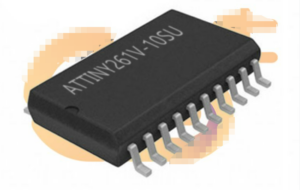
Salinan firmware, biner, atau kode sumber asli yang tersisa berada di dalam mikrokontroler Microchip ATtiny261V yang terlindungi itu sendiri. Dokumentasi mungkin hilang, pemasok mungkin menghentikan dukungan, atau insinyur mungkin perlu memulihkan logika operasional perangkat lama. Dalam keadaan ini, organisasi berupaya untuk membuka, mengekstrak, atau memulihkan flash, EEPROM, dan data konfigurasi yang tersimpan di dalam mikrokontroler Microchip ATtiny261V yang terlindungi. Namun, mendapatkan akses ke informasi ini bukanlah proses yang mudah. ​​Chip biasanya menggunakan pengaturan pengaman, terlindungi, terenkripsi, atau terkunci yang mencegah penyalinan atau duplikasi tanpa izin. Mengekstrak program tertanam dari mikroprosesor Microchip ATtiny261V yang terkunci menawarkan nilai yang signifikan bagi klien. Hal ini memungkinkan perusahaan untuk terus mengoperasikan atau memperbaiki perangkat lama, mereproduksi papan kontrol yang dihentikan, atau mendesain ulang produk tanpa membangun kembali seluruh firmware dari awal. Ini mendukung validasi kualitas, analisis fungsional, peningkatan sistem, dan pengembangan ulang kompatibilitas. Pada akhirnya, mengekstrak kode chip MCU terenkripsi Microchip ATtiny261V memberikan jalur yang praktis dan hemat biaya untuk melestarikan aset intelektual, memperpanjang siklus hidup produk, dan memungkinkan migrasi teknologi yang berkelanjutan.

In many real-world situations, the only remaining copy of the original firmware, binary, or source code resides within the microcontroller itself. Documentation may be lost, suppliers may discontinue support, or engineers may need to recover the operational logic of a legacy device. In these circumstances, organizations seek to open, extract, or restore the flash, EEPROM, and configuration data stored inside the ATtiny261V. However, gaining access to this information is not a trivial process. The chip typically employs secured, protected, encrypted, or locked fuse settings that prevent unauthorized copying or duplication.

Extract MCU ATtiny261V Code from its locked memory, break microcontroller attiny261 tamper resistance system and readout the embedded firmware from MCU;
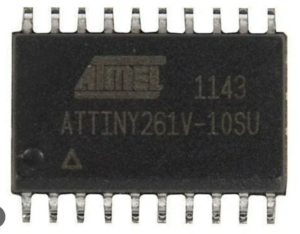
Extract MCU ATtiny261V Code from its locked memory, break microcontroller attiny261 tamper resistance system and readout the embedded firmware from MCU;

The AVR core combines a rich instruction set with 32 general purpose working registers. All the 32 registers are directly connected to the Arithmetic Logic Unit (ALU), allowing two independent registers to be accessed in one single instruction executed in one clock cycle.

The resulting architecture is more code efficient while achieving throughputs up to ten times faster than conventional CISC microcontrollers.

The ATtiny261/461/861 provides the following features: 2/4/8K byte of In-System Programmable Flash, 128/256/512 bytes EEPROM, 128/256/512 bytes SRAM, 6 general purpose I/O lines, 32 general purpose working registers, one 8-bit Timer/Counter with compare modes, one 8-bit high speed Timer/Counter, Universal Serial Interface, Internal and External Interrupts, a 4-channel, 10-bit ADC, a programmable Watchdog Timer with internal Oscillator, and three software selectable power saving modes.
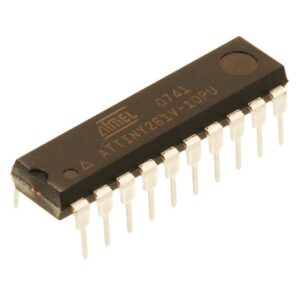
ओरिजिनल फर्मवेयर, बाइनरी, या सोर्स कोड की बची हुई कॉपी माइक्रोचिप ATtiny261V सिक्योर्ड माइक्रोकंट्रोलर में ही रहती है। डॉक्यूमेंटेशन खो सकते हैं, सप्लायर सपोर्ट बंद कर सकते हैं, या इंजीनियरों को किसी लेगेसी डिवाइस के ऑपरेशनल लॉजिक को रिकवर करने की ज़रूरत पड़ सकती है। इन हालात में, ऑर्गनाइज़ेशन प्रोटेक्टिव माइक्रोचिप ATtiny261V माइक्रोकंट्रोलर के अंदर स्टोर फ्लैश, EEPROM, और कॉन्फ़िगरेशन डेटा को खोलने, निकालने, या रिस्टोर करने की कोशिश करते हैं। हालांकि, इस जानकारी तक एक्सेस पाना कोई आसान प्रोसेस नहीं है। चिप में आमतौर पर सिक्योर्ड, प्रोटेक्टेड, एन्क्रिप्टेड, या लॉक्ड फ़्यूज़ सेटिंग्स होती हैं जो बिना इजाज़त कॉपी या डुप्लीकेशन को रोकती हैं। लॉक्ड माइक्रोचिप ATtiny261V माइक्रोप्रोसेसर के एम्बेडेड प्रोग्राम को निकालने से क्लाइंट्स को काफ़ी फ़ायदा मिलता है। यह कंपनियों को लेगेसी डिवाइस को ऑपरेट करना या रिफर्बिश करना जारी रखने, बंद हो चुके कंट्रोल बोर्ड को फिर से बनाने, या पूरे फर्मवेयर को शुरू से फिर से बनाए बिना प्रोडक्ट्स को रीडिज़ाइन करने की इजाज़त देता है। यह क्वालिटी वैलिडेशन, फंक्शनल एनालिसिस, सिस्टम अपग्रेडिंग, और कम्पैटिबिलिटी रीडेवलपमेंट को सपोर्ट करता है। आखिरकार, माइक्रोचिप ATtiny261V एन्क्रिप्टेड MCU चिप कोड निकालने से इंटेलेक्चुअल एसेट्स को बचाने, प्रोडक्ट लाइफसाइकल को बढ़ाने और सस्टेनेबल टेक्नोलॉजी माइग्रेशन को मुमकिन बनाने का एक प्रैक्टिकल और कॉस्ट-इफेक्टिव रास्ता मिलता है।

Overcoming such protections requires specialized reverse-engineering capabilities. Although the process may be described informally as a hack, it is, in fact, a controlled, technical operation involving analysis of the microcontroller architecture and careful manipulation of the chip’s internal memory domains. The objective is to generate a clean program dump, complete heximal archive, or fully readable program file without damaging the device or introducing inconsistencies in the extracted program.
원래 펌웨어, 바이너리 또는 소스 코드의 잔여 사본은 보안이 강화된 Microchip ATtiny261V 마이크로컨트롤러 자체 내에 보관되어 있습니다. 문서가 분실되거나, 공급업체에서 지원을 중단하거나, 엔지니어가 기존 장치의 작동 로직을 복구해야 하는 상황이 발생할 수 있습니다. 이러한 상황에서 기업들은 보호 장치가 내장된 Microchip ATtiny261V 마이크로컨트롤러 내부에 저장된 플래시 메모리, EEPROM 및 구성 데이터를 열거나 추출하거나 복원하려고 합니다. 그러나 이러한 정보에 접근하는 것은 간단한 과정이 아닙니다. 이 칩은 일반적으로 무단 복사 또는 복제를 방지하기 위해 보안, 보호, 암호화 또는 잠금 퓨즈 설정을 사용합니다. 잠금 처리된 Microchip ATtiny261V 마이크로프로세서의 내장 프로그램을 추출하는 것은 고객에게 상당한 가치를 제공합니다. 이를 통해 기업은 기존 장치를 계속 운영하거나 재정비하고, 단종된 제어 보드를 복제하거나, 전체 펌웨어를 처음부터 다시 구축하지 않고도 제품을 재설계할 수 있습니다. 또한 품질 검증, 기능 분석, 시스템 업그레이드 및 호환성 재개발을 지원합니다. 궁극적으로 마이크로칩 ATtiny261V 암호화 MCU 칩 코드 추출은 지적 재산을 보호하고 제품 수명 주기를 연장하며 지속 가능한 기술 이전을 가능하게 하는 실용적이고 비용 효율적인 방법을 제공합니다.

The difficulties arise from multiple embedded safeguards: locked readout fuses, encrypted memory blocks, and structured protection schemes that resist straightforward access. Each ATtiny261V must be handled with precision to ensure that the archive of program logic recovered from the MCU is accurate and complete. While the methodologies involved remain proprietary, the expertise applied ensures reliability and repeatability.

The Idle mode stops the CPU while allowing the SRAM, Timer/Counter, ADC, Analog Comparator, and Interrupt system to continue functioning.

The Power-down mode saves the register contents, disabling all chip functions until the next Interrupt or Hardware Reset. The ADC Noise Reduction mode stops the CPU and all I/O modules except ADC, to minimize switching noise during ADC conversions.

The device is manufactured using Atmel’s high density non-volatile memory technology. The On-chip ISP Flash allows the Program memory to be re-programmed In-System through an SPI serial interface, by a conventional non-volatile memory programmer or by an On-chip boot code running on the AVR core.

The ATtiny261/461/861 AVR is supported with a full suite of program and system development tools including: C Compilers, Macro Assemblers, Program Debugger/Simulators, In-Circuit Emulators, and Evaluation kits.

Port A is an 8-bit bi-directional I/O port with internal pull-up resistors (selected for each bit). The Port A output buffers have symmetrical drive characteristics with both high sink and source capability.
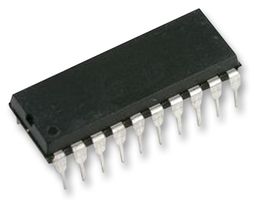
break Microchip ATTINY261V mcu flash memory

As inputs, Port A pins that are externally pulled low will source current if the pull-up resistors are activated. The Port A pins are tri-stated when a reset condition becomes active, even if the clock is not running.

Port B is an 8-bit bi-directional I/O port with internal pull-up resistors (selected for each bit). The Port B output buffers have symmetrical drive characteristics with both high sink and source capability.

As inputs, Port B pins that are externally pulled low will source current if the pull-up resistors are activated. The Port B pins are tri-stated when a reset condition becomes active, even if the clock is not running.

  1. For compatibility with future devices, reserved bits should be written to zero if accessed. Reserved I/O memory addresses should never be written.
  2. I/O Registers within the address range 0x00 – 0x1F are directly bit-accessible using the SBI and CBI instructions. In these registers, the value of single bits can be checked by using the SBIS and SBIC instructions after Extract MCU.
  3. Some of the Status Flags are cleared by writing a logical one to them. Note that, unlike most other AVRs, the CBI and SBI instructions will only operation the specified bit, and can therefore be used on registers containing such Status Flags. The CBI and SBI instructions work with registers 0x00 to 0x1F only.
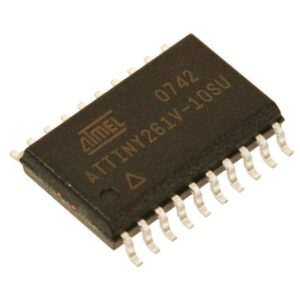
オリジナルのファームウェア、バイナリ、またはソースコードの残りのコピーは、Microchip ATtiny261Vセキュアマイクロコントローラ自体に存在します。ドキュメントが紛失したり、サプライヤーがサポートを中止したり、エンジニアがレガシーデバイスの動作ロジックを復旧する必要が生じたりする可能性があります。このような状況では、組織は保護されたMicrochip ATtiny261Vマイクロコントローラ内に格納されているフラッシュメモリ、EEPROM、および構成データを開いたり、抽出したり、復元したりしようとします。しかし、これらの情報へのアクセスは容易ではありません。チップは通常、セキュア、保護、暗号化、またはロックされたヒューズ設定を採用しており、不正なコピーや複製を防止します。ロックされたMicrochip ATtiny261Vマイクロプロセッサの組み込みプログラムを抽出することは、顧客にとって大きな価値をもたらします。これにより、企業はレガシーデバイスの運用継続や改修、製造中止になった制御ボードの再現、ファームウェア全体をゼロから再構築することなく製品の再設計を行うことができます。品質検証、機能分析、システムアップグレード、互換性の再開発をサポートします。最終的に、Microchip ATtiny261V の暗号化された MCU チップ コードを抽出することで、知的資産の保存、製品ライフサイクルの延長、持続可能なテクノロジ移行を可能にするための実用的かつコスト効率の高い方法が提供されます。

Extracting the embedded program offers significant value to clients. It allows companies to continue operating or refurbishing legacy devices, reproduce discontinued control boards, or redesign products without rebuilding the entire firmware from scratch. It supports quality validation, functional analysis, system upgrading, and compatibility redevelopment. Ultimately, extracting ATtiny261V code provides a practical and cost-efficient path to preserving intellectual assets, extending product lifecycles, and enabling sustainable technology migration.

Through advanced reverse engineering and precision extraction workflows, we transform protected microcontroller memory into accessible, actionable engineering knowledge—supporting long-term resilience and uninterrupted business operations.