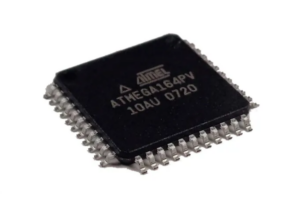
Extract MCU ATmega164PV Code is a dedicated firmware recovery service created for authorized scenarios where access to original embedded program files has been lost, restricted, or rendered unusable over time. The ATmega164PV is a low-power AVR microcontroller widely deployed in industrial automation, smart metering, environmental monitoring, medical devices, portable instruments, and energy-efficient consumer products. Its balanced combination of flash memory, EEPROM, SRAM, and peripheral interfaces makes it suitable for applications that demand reliability, longevity, and stable embedded performance in harsh or power-constrained environments.
The ATmega164PV is known for its picoPower design, flexible clocking, rich I/O resources, and integrated non-volatile memory architecture. To protect intellectual property, many systems configure protective, protected, locked, or encrypted security settings that prevent direct access to firmware, binary, or heximal data. While these protections are essential during production, they often become a limitation during product refurbishment, failure analysis, migration to new hardware, or controlled duplication. Our Extract MCU ATmega164PV Code service is positioned to help clients attack and break these access barriers in a lawful and engineering-driven context, enabling the retrieval of embedded program archives when business continuity depends on it.
Extract MCU ATmega164PV Code needs to break microcontroller atmega164pv security fuse bit and crack protection against MCU ATmega164PV memory include flash and eeprom;
- The frequency ranges are preliminary values. Actual values are TBD.
- This option should not be used with crystals, only with ceramic resonators.
- If 8 MHz frequency exceeds the specification of the device (depends on VCC), the CKDIV8 Fuse can be programmed in order to divide the internal frequency by 8. It must be ensured that the resulting divided clock meets the frequency specification of the device.
- These options should only be used when not operating close to the maximum frequency of the device, and only if frequency stability at start-up is not important for the application. These options are not suitable for crystals.
- These options are intended for use with ceramic resonators and will ensure frequency stability at start-up. They can also be used with crystals when not operating close to the maximum frequency of the device, and if frequency stability at start-up is not important for the application.
Pins XTAL1 and XTAL2 are input and output, respectively, of an inverting amplifier which can be configured for use as an On-chip Oscillator, as shown in Figure 22. Either a quartz crystal or a ceramic resonator may be used.
This Crystal Oscillator is a full swing oscillator, with rail-to-rail swing on the XTAL2 output. This is useful for driving other clock inputs and in noisy environments. The current consumption is higher than the “Low Power Crystal Oscillator” on page 41. Note that the Full Swing Crystal Oscillator will only operate for Vcc = 2.7 – 5.5 volts.
C1 and C2 should always be equal for both crystals and resonators. The optimal value of the capacitors depends on the crystal or resonator in use, the amount of stray capacitance, and the electromagnetic noise of the environment. Some initial guidelines for choosing capacitors for use with crystals are given in Table 12. For ceramic resonators, the capacitor values given by the manufacturer should be used.
The operating mode is selected by the fuses CKSEL3..1 as shown in Table 11.
- The frequency ranges are preliminary values. Actual values are TBD.
- If 8 MHz frequency exceeds the specification of the device (depends on VCC), the CKDIV8 Fuse can be programmed in order to divide the internal frequency by 8. It must be ensured that the resulting divided clock meets the frequency specification of the device.
- These options should only be used when not operating close to the maximum frequency of the device, and only if frequency stability at start-up is not important for the application. These options are not suitable for crystals.
- These options are intended for use with ceramic resonators and will ensure frequency stability at start-up. They can also be used with crystals when not operating close to the maximum frequency of the device, and if frequency stability at start-up is not important for the application.
At a conceptual level, extracting embedded code from a secured microcontroller requires careful understanding of how flash, EEPROM, and memory protection are implemented. Each project presents its own technical challenges, such as segmented program storage, secured readout mechanisms, or aging devices that demand non-destructive handling. Rather than relying on generic tools, the process focuses on decoding internal memory organization and reconstructing consistent firmware data. The goal is to retrieve usable program files—whether firmware, binary, or heximal—that can be validated, archived, and prepared for cloning or duplication, without disclosing sensitive technical procedures.
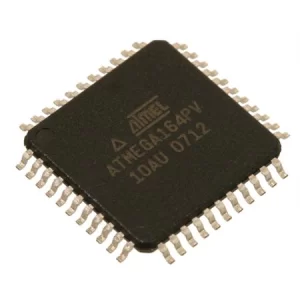
For end users, the benefits of this service are both practical and strategic. Recovered source code equivalents and program data allow legacy systems to remain operational, reduce the cost of redesign, and support long-term maintenance of deployed products. Manufacturers and system integrators can duplicate existing functionality, migrate designs to updated platforms, or restore lost development assets without interrupting production or field operations. By offering a discreet and professional solution for ATmega164PV firmware extraction, we help clients regain control over secured embedded memory, protect their investments, and extend the lifecycle of proven technologies across multiple industries.